
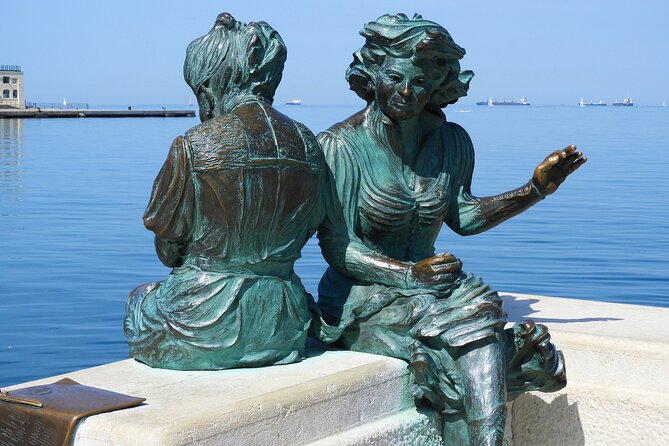
Reviewed · TRIESTE TOURS
Private Trieste Sightseeing Tour
Trieste’s story changes sharply as you walk: Roman ruins sit near medieval churches, while broad squares and elegant buildings recall the city’s time as a major Habsburg port. This private tour threads those layers together, from San Giusto Hill to the waterfront, with a guide to explain why Trieste feels distinct from many Italian cities.
I like two things in particular: the range of eras packed into a short walk, and the personal format, which lets your guide adjust the pace and focus. Guides named in past tours include Sonia, Sonja, Christina, Jerome and Gabriella. If you have a preference, you can ask about Sonia when booking, but a particular guide is not guaranteed.
The main consideration is the terrain. San Giusto involves hills and the route covers a lot of ground in two and a half hours, so this is best if you are comfortable walking. You’ll also want covered shoulders and knees to enter places of worship.
- Roman and medieval Trieste: See the forum area, Richard’s Arch, the Roman theatre and San Giusto Cathedral.
- A private route: Only your group joins, and you can share interests such as art, architecture, history or culture in advance.
- Habsburg-era city life: Walk the Theresian district, Grand Canal and former trade center around Piazza della Borsa.
- A historic café stop: Caffè Tommaseo is included as a tour pause; drinks and food cost extra.
- Harbor views to finish: The route ends at Molo Audace, facing the city’s seafront and the Gulf of Trieste.
- Practical note: Hotel or port pickup is offered, but hotel drop-off and private transport are not included.
From San Giusto Hill to the sea
The route is a compact introduction to central Trieste, not a deep visit inside every landmark. Most stops are brief, usually around ten minutes, while San Giusto Hill and the Theresian district each get about half an hour. That balance gives you time to see the city’s main contrasts without turning the walk into a string of hurried photo stops.
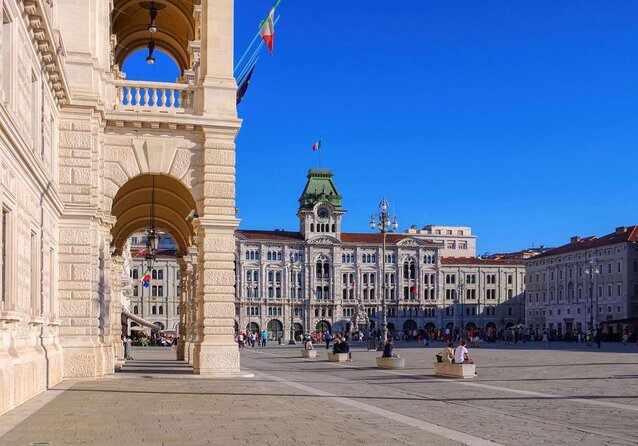
The tour begins at Piazza Unità d’Italia, though hotel or port pickup is offered. Because the stated meeting point and pickup option are not the same thing, confirm the exact starting arrangement when you book. The walk ends back at the meeting point, so plan any onward travel from there.
San Giusto Hill brings the oldest layers together
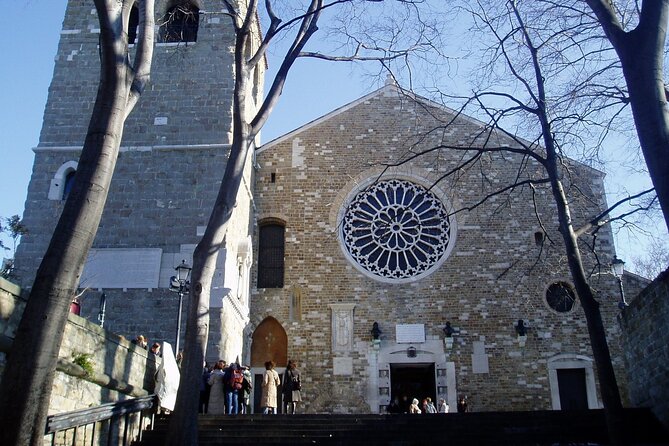
San Giusto is the strongest history stop, and the half-hour here gives your guide room to connect several landmarks. The hill is described as Trieste’s ancient civic center, with Roman remains including the forum and the ancient Civil Basilica. You’ll also see the medieval castle from outside and visit the Cathedral of San Giusto.
Inside the cathedral, Byzantine mosaics and medieval frescoes are the main draw. This is a useful place to slow down and take in the city’s long timeline: Roman civic life, medieval rule and the religious importance of the hill all meet within a short stretch. The views and legends around the cathedral also came up as highlights for some people on the walk.
The castle is an exterior stop, so don’t expect a tour of its rooms. The church is a place of worship, and appropriate clothing matters: shoulders and knees must be covered for both men and women. If attending a service is important to you, ask your guide what may be possible; one group was able to attend part of a mass, but that should not be treated as a guaranteed feature.
San Giusto is also where the route’s physical demands become clear. Expect uphill walking and uneven city terrain. If heat or hills are a concern, tell your guide in advance. Guides have adapted tours for hot weather and shortened routes to focus on the main sights, but you should agree on what is realistic for your group.
More sightseeing tours around Trieste:
- Trieste Exploration Game and City Tour on your Phone
★ 5.0 · 3 reviews - Murano, Burano and Torcello Half-Day Sightseeing Tour
★ 3.5 · 7,928 reviews - Verona: Hop-on Hop-off Tour 24 or 48-Hour Ticket
★ 4.4 · 2,010 reviews
Roman remains in the old town
Richard’s Arch is a quick stop, but its age gives it an outsized place in the story of Trieste. It stands in the older part of town and is described as the city’s most ancient monument. Your guide can provide context that helps you read this small structure as more than a stone arch tucked among later streets.
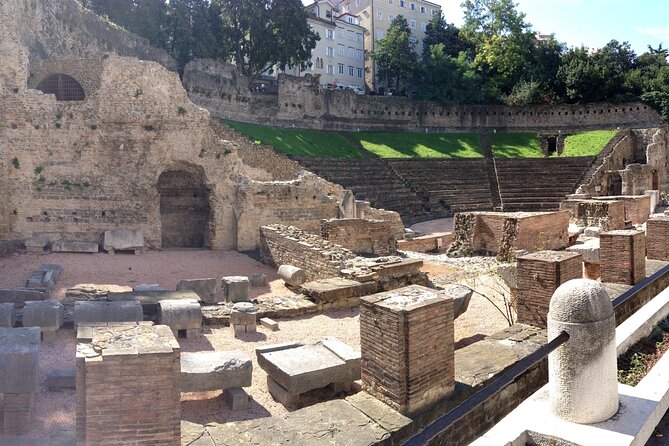
A short walk away, the Roman Theatre is the most visually striking archaeological site on the route. Dating to the first century, it offers a more immediate sense of the city’s Roman past than the brief stop at the arch. Ten minutes is enough for an introduction and a look around, but not a long archaeological visit.
These stops work well together. The arch gives you a small, old fragment embedded in the city, while the theatre makes Roman Trieste easier to picture at a larger scale. You won’t spend long at either one, so anyone wanting an in-depth archaeological visit should set aside extra time to explore independently after the tour.
The Jewish Ghetto and Trieste’s changing center
The route next passes through the Jewish Ghetto, another short stop in the old city. This adds an important social layer to a tour that otherwise spends much of its time on architecture, monuments and civic spaces. Ask your guide about the area’s history and its place in Trieste’s wider story; the ten-minute window makes this an introduction rather than a full treatment.
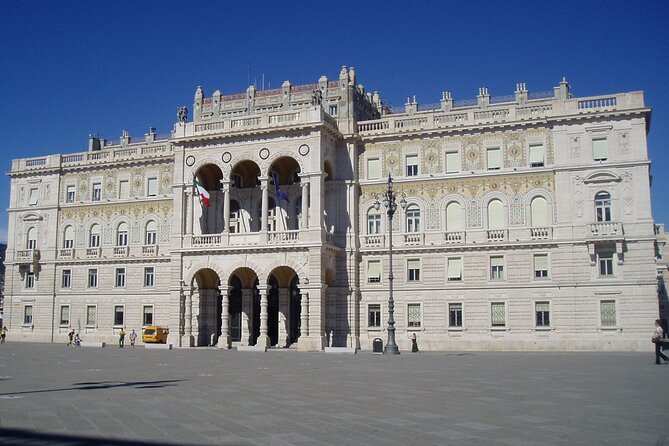
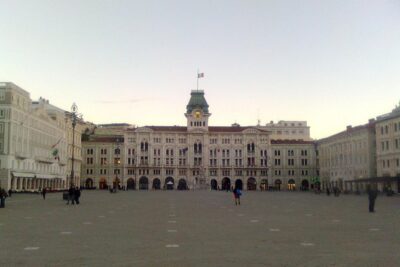
The contrast becomes clear at Piazza Unità d’Italia. This broad main square faces the sea and is framed by elegant historic buildings. It is one of the largest sea-facing squares in Europe, and it gives you a sense of Trieste as a city shaped by trade, government and its waterfront setting.
The square is a natural place to pause and look around. Its scale differs from the tighter streets of the old town, and that change helps explain why Trieste can feel both Italian and Central European. The tour does not promise a building-by-building interior visit, so use your guide’s commentary to notice the facades and understand how the square fits into the city.
Piazza della Borsa and the city of trade
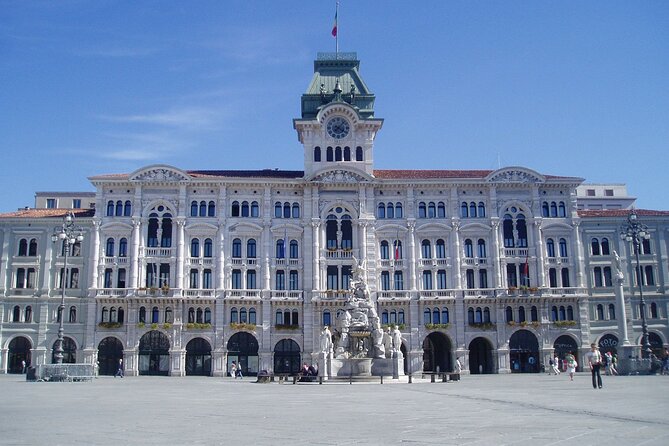
Piazza della Borsa was the city’s trade center during the nineteenth century. The Old Stock Exchange building dominates the square, making this a useful stop for understanding Trieste beyond its Roman and religious landmarks. The city’s fortunes were tied to commerce, and this square offers a clear visual clue to that past.
The stop is brief, but it links naturally to the Theresian district that follows. Rather than treating each square as an isolated photo opportunity, a good guide can show how Trieste’s growth changed the city’s shape and character. If architecture is a particular interest, mention that when booking so the guide can prepare accordingly.
More private tours around Trieste:
- Trieste Private Walking Tour with a Local
★ 4.5 · 52 reviews - Private Transfer Trieste Port to Venice Marco Polo Airport / City
★ 4.5 · 29 reviews - Private Transfer from Trieste to Venice Airport / Venice City
★ 4.5 · 28 reviews - Private tour/Shore excursion to Lake Bled and Ljubljana from Trieste
★ 5.0 · 24 reviews
The Theresian district and Grand Canal
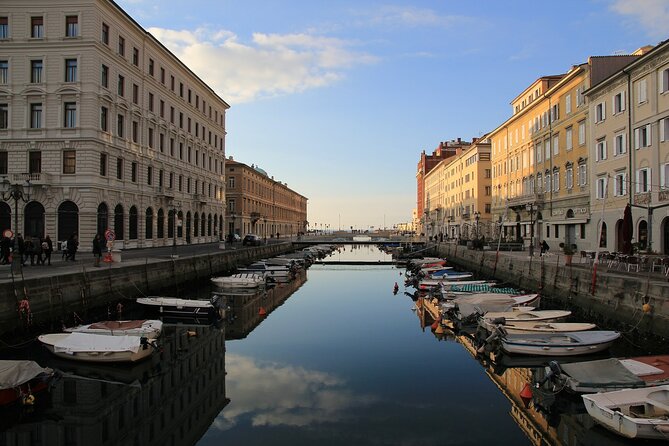
The Theresian district gets about thirty minutes, matching San Giusto as one of the route’s longer sections. Its straight, planned street grid feels different from the older lanes. You’ll pass elegant buildings, Greek and Orthodox churches, historic cafés and the Grand Canal, with more of the city’s everyday character on display.
This part of the walk is especially useful for understanding Trieste’s Central European connections. Its churches and planned streets make the city feel unlike the familiar image of an Italian old town. The Grand Canal adds a waterway to the urban scene, and the surrounding area is a good place to notice how trade and different communities shaped the city.
The route includes the Greek Orthodox Church of Saint Nicholas, built at the end of the eighteenth century. Its neoclassical facade gives way to an interior decorated with gilded icons and paintings. As with the cathedral, entry to a place of worship calls for covered shoulders and knees. The ten-minute stop is a chance to appreciate the interior, not a lengthy visit.
The nearby Teatro Verdi, one of the oldest opera houses still in operation, adds another piece of the city’s cultural life. It was built at the end of the eighteenth century. The tour makes a short stop outside rather than offering an opera performance, so treat it as a landmark and ask your guide what role it has played in local life.
Caffè Tommaseo: a pause, not a meal
Caffè Tommaseo dates to 1830 and is described as Trieste’s oldest café. Its refined stuccos and original mirrors make the interior part of the appeal, while the café itself gives you a taste of a city where coffee is more than a quick caffeine stop. The tour includes a pause here, but food and drinks are not included in the price.
You can use the break for coffee, a cold drink or something to eat, at your own expense. Some groups have enjoyed appetizers here, and a café pause can be a welcome rest between the uphill old town and the walk through the center. If you’d rather spend more time at a particular church or square, tell your guide early so you can discuss how to use the time.
The café also makes a good starting point for your own later exploration. If you want a longer meal, ask your guide for local suggestions. Buffet da Pepi, for example, was recommended to one group for sandwiches, though the tour does not include a meal there.
Molo Audace ends the walk with sea air
The final stop is Molo Audace, the pier opposite Piazza Unità d’Italia. From here, you look back toward the seafront and across the Gulf of Trieste. It is a fitting finish: after a walk through Roman remains, churches and trading squares, you arrive at the water that helped shape the city.
The pier is also known for sunset views, though the timing of your tour will determine what you see. The listed stop is about ten minutes, enough for a final look and a few photos before returning to the meeting point. If you want to linger, ask whether the tour schedule allows it.
What the private format is worth
The price is $133.03 per person, with group discounts available. That is a substantial cost for a two-and-a-half-hour walk, but the value depends on what you want from a first visit. You are paying for a private guide, hotel or port pickup, a planned route across several parts of the city and the chance to shape the emphasis around your interests. The café stop is included as a pause, but food, drinks and private transportation are extra.
A private tour makes most sense for a small group that wants context and flexibility rather than a low-cost group walk. You can tell the guide in advance if you care most about architecture, art, history or culture. Past guides have also adjusted routes for heat, special requests and different starting locations, though it is wise to ask about any change before the tour.
The language offered is English. Children aged 11 and under are free when accompanied by a paying adult, and service animals are allowed. Most people can take part, but the walk’s hills are worth considering if anyone in your group has limited stamina. Confirmation is subject to availability and is normally received within 48 hours of booking.
The guides named in past experiences include Sonia, Sonja, Christina, Jerome and Gabriella. Sonia is especially often requested, and descriptions of her guiding emphasize clear storytelling, local detail and flexibility. You can ask for her when booking, but the provider may assign someone else. The quality of a private tour depends greatly on the person leading it, so sharing your interests and asking about guide availability is a sensible step.
Who should book this Trieste walk
I’d choose this tour if you’re new to Trieste and want the city’s main historic areas explained before exploring on your own. It is particularly well suited to people curious about the mix of Roman, medieval, Habsburg-era, Greek Orthodox and Jewish influences. The route is broad enough to help you decide where to return, while the guide can offer suggestions for later meals and further sightseeing.
It is also a good fit for a cruise stop or a short stay, especially if port pickup makes the start easier. Keep in mind that hotel drop-off is not included, and private transport is not part of the standard package. Confirm your pickup and finish details before setting other plans.
I would hesitate if you want a slow museum visit, extensive time inside each landmark or a flat, easy stroll. The schedule moves through many stops, and San Giusto’s hill adds effort. For a focused introduction, though, this is a strong way to see how Trieste’s past meets its open seafront. Book if the private format and historical storytelling matter more to you than keeping the cost down.
FAQ
How long is the private Trieste sightseeing tour?
The guided walking tour lasts about two hours and 30 minutes.
Is the tour private?
Yes. Only your group participates.
Where does the tour start and end?
The listed meeting point is Piazza Unità d’Italia, 8, in Trieste. The activity ends back at the meeting point. Hotel or port pickup is offered, so confirm the exact pickup arrangement when booking.
Is food or coffee included?
No. The tour includes a stop at historic Caffè Tommaseo, but food and drinks are not included.
Are entrance tickets included?
The listed stops have no admission charge. The San Giusto Castle is viewed from outside.
What should I wear to enter churches?
Shoulders and knees must be covered for both men and women in places of worship and selected museums.
Can I request a specific guide?
You can share special interests when booking and ask about a particular guide, such as Sonia. A specific guide is not guaranteed.
Recently added in Trieste
- Venice from Trieste Port – Transfer or Tour for Disembarking Ship★ 4.5 · 9 reviews
- Transfer from Trieste cruise terminal to Venice★ 4.0 · 13 reviews
- Trieste Walking Tour with Audio and Written Guide by a Local★ 4.5 · 73 reviews
- Trieste Exploration Game and City Tour on your Phone★ 5.0 · 3 reviews
- Trieste Private Walking Tour with a Local★ 4.5 · 52 reviews
- Private Transfer Trieste Port to Venice Marco Polo Airport / City★ 4.5 · 29 reviews
- Short daily trip from Trieste to Postojna cave★ 5.0 · 5 reviews
- Small-Group Transfer from Trieste City to Trieste Airport★ 5.0 · 11 reviews
Trieste Tours, compared.
Miramare Castle & Museum Entry Ticket & Audio App
Read our review →
Browse the lists this tour appears in