
Reviewed · TRIESTE TOURS
Trieste Exploration Game and City Tour on your Phone
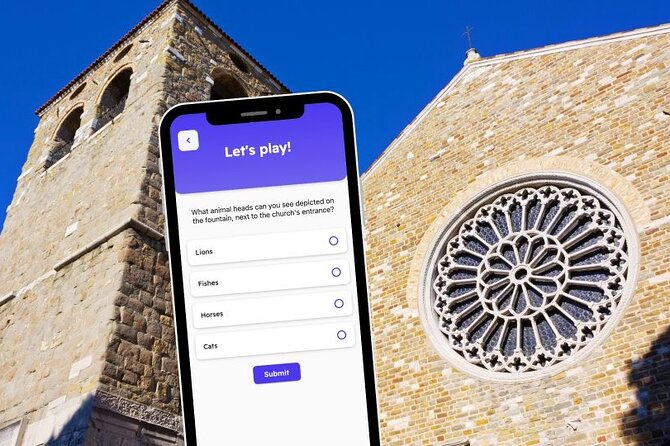
Trieste’s story is written in layers: Roman arches and a theatre sit alongside Habsburg-era streets and a square that marks the city’s later place in Italy. This self-guided phone game connects eight landmarks, so you get a route and bite-size context without joining a group.
I like two things here: the quizzes make the walk more active than simply following a map, and the flexible format lets you pause when a square or church deserves more time. At $9.66 per person, it is a modest way to get your bearings and choose what to explore further.
The trade-off is clear: there is no personal guide or audio tour to bring the stories to life as you walk. You also need your own phone, and admission to some sites is not included.
- Eight stops link Roman and Habsburg-era Trieste, from the Castle of Saint Giusto to Canal Grande.
- The quizzes turn sightseeing into a game, with short guides about each monument.
- You control the pace, with an estimated duration of one to two hours.
- The route begins and ends at San Giusto Cathedral, with the activity described as a private experience for your group.
- Some admission is not included, including the Castle of Saint Giusto and Teatro Lirico Giuseppe Verdi.
- Four languages are available: English, French, German, and Spanish.
A phone game for finding Trieste’s highlights
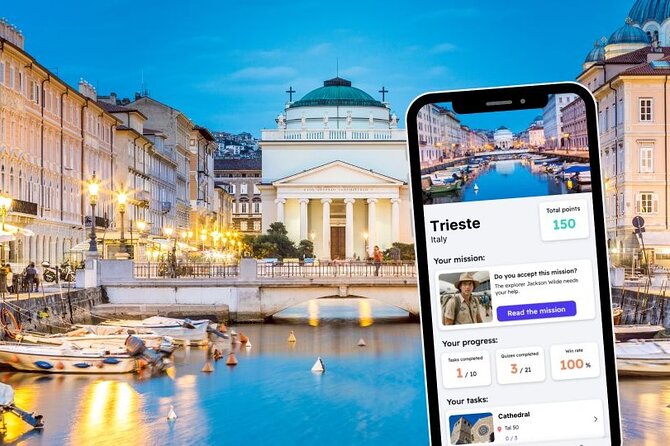
This is a city walk with a little structure. Instead of deciding on the spot which landmark comes next, you follow an activity on your phone, read short guides, and answer quiz questions along the way. That makes it useful if you want a clear starting point without committing to a scheduled group tour.
The experience is intended for Android and iOS apps, or for use in a browser. The description does not specify whether the activity needs a continuous internet connection, so check the app or booking details before setting off if you expect to be offline.
The listed duration is one to two hours. Each of the eight stops is allotted about 15 minutes, adding up to two hours if you spend the full suggested time at every site. You can move faster, or pause longer, but those extra minutes are yours to manage.
One small point is worth keeping in mind: the tour’s meeting point is Cattedrale di San Giusto Martire, while the first named stop is the Castle of Saint Giusto. Both are part of the San Giusto area, and the activity ends back at its meeting point.
Start among the stones of San Giusto
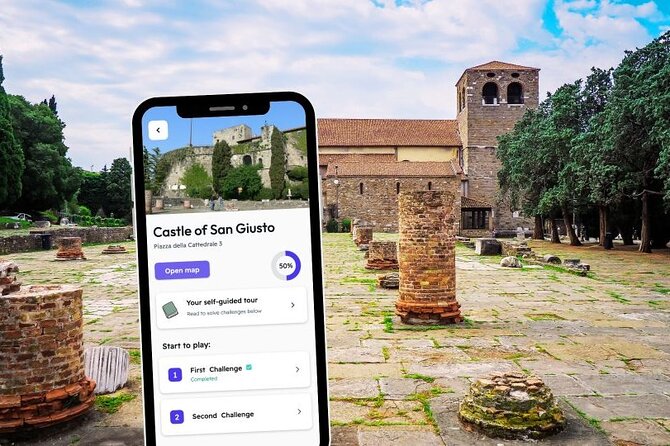
The walk begins at the Cathedral of San Giusto Martire, at Piazza della Cattedrale 2. The first listed stop is the Castle of Saint Giusto, a fortress built over several centuries, beginning in the 15th century and receiving major additions through the 17th century. It occupies ground where Roman fortifications once stood.
That layering is a useful introduction to Trieste. You are not looking at a single moment in the city’s past, but a site shaped and reused across long stretches of time. The phone guide can give you a framework for noticing that history before you move on to the older Roman remains downtown.
The stop is allotted 15 minutes, but the castle’s admission is not included. The tour price therefore buys the route, guides, and quizzes, not entry to every site. If you plan to go inside, allow extra time and check admission details separately.
More sightseeing tours around Trieste:
- Private Trieste Sightseeing Tour
★ 5.0 · 95 reviews - Murano, Burano and Torcello Half-Day Sightseeing Tour
★ 3.5 · 7,928 reviews - Verona: Hop-on Hop-off Tour 24 or 48-Hour Ticket
★ 4.4 · 2,010 reviews
Find the Roman past at Arco di Riccardo
Arco di Riccardo is one of Trieste’s oldest surviving structures, dating to around the first century BCE. Its modest scale makes it a different kind of stop from a grand piazza or a large theatre: this is a compact fragment of the Roman city, encountered within the modern streetscape.
The allotted 15 minutes gives you time to read the short guide and consider how old the arch is. Admission is free, so this stop does not add an entry fee to the outing. The quiz format may help you look more closely rather than simply pass by.
A short stop like this is where a self-guided route earns its keep. Without a little context, an ancient arch can be easy to overlook; with a few facts in hand, you have a better sense of why it matters.
Picture a crowd at the Roman Theatre
The Roman Theatre was built in the first century AD during the reign of Emperor Augustus. It could hold between 3,500 and 6,000 spectators, a striking scale to imagine while standing near a structure that has survived for roughly two thousand years.
The visit is allotted 15 minutes, and admission is free. That makes it a straightforward stop on the route, though the suggested time is brief if you want to linger or take a closer look. The phone guide’s role is to supply context; there is no live guide to answer questions or tell the story in person.
Pairing this theatre with Arco di Riccardo gives you two distinct glimpses of Roman Trieste. One is a surviving arch, the other a public entertainment venue built for thousands. Together they make the city’s Roman chapter easier to picture.
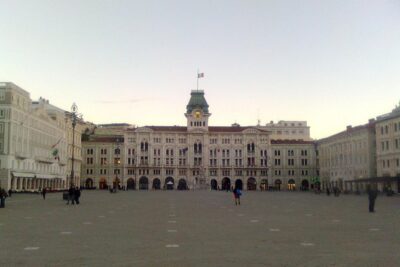
Take in the scale of Piazza dell’Unità d’Italia
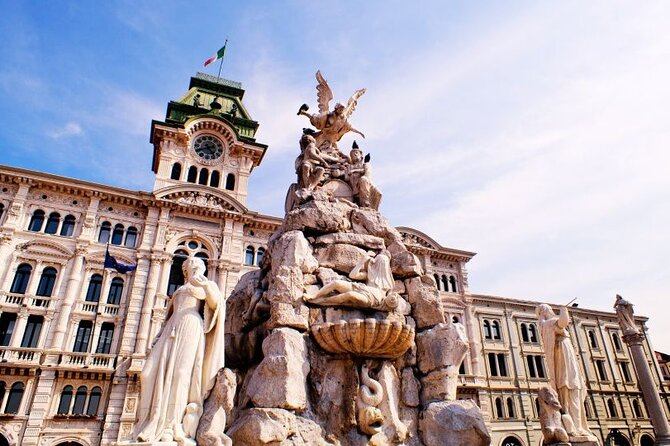
Piazza dell’Unità d’Italia has been central to Trieste’s urban life since the 19th century. Its name means Square of the Unification of Italy and commemorates Trieste’s incorporation into the Kingdom of Italy in 1918.
The square is allotted 15 minutes, with no admission fee. Here, the value is not a ticketed interior but the chance to pause in a major public space and connect its name to a turning point in the city’s political history. A short guide can help you read the place as more than a scenic pause between older monuments.
You may want to stay longer than the suggested quarter-hour. The activity gives you a route, but it does not require you to hurry on once the quiz is done. If you are using the walk to get oriented, this is a natural spot to stop and take in the surroundings before continuing.
More self-guided options around Trieste:
- Trieste Bus Tour with Audio Guide
★ 4.5 · 1,648 reviews - Trieste Bus Tour with Audio Guide
★ 4.0 · 214 reviews - Trieste: Miramare Castle & Museum Entry Ticket & Audio App
★ 4.2 · 213 reviews - Trieste Walking Tour with Audio and Written Guide by a Local
★ 4.5 · 73 reviews
Look beyond the square at Teatro Verdi
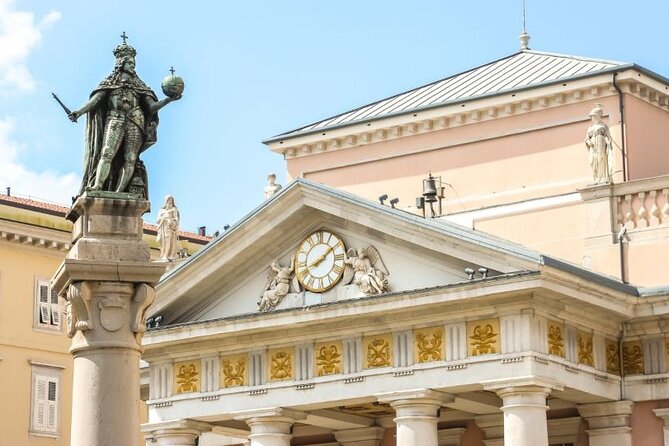
Teatro Lirico Giuseppe Verdi opened in 1801 as Teatro Nuovo. In 1901 it was renamed for the Italian composer Giuseppe Verdi, making it one of Italy’s oldest opera houses.
The route allots 15 minutes here, but admission is not included. The tour does not say that a performance or interior visit is part of the activity, so treat this as a landmark stop rather than a ticket to the theatre. If you want to go inside, plan and pay for that separately.
This stop adds a cultural thread to a route otherwise anchored by Roman remains, churches, and civic spaces. It also shows how Trieste’s landmarks reflect different periods of the city’s life, rather than telling one story in a straight line.
Read the city’s commercial past at Piazza della Borsa
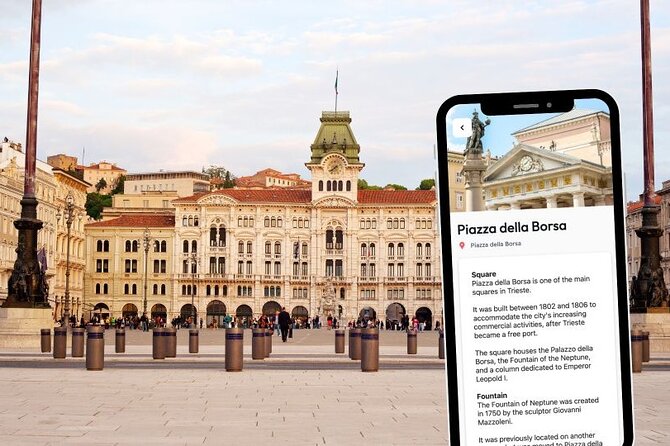
Piazza della Borsa has served as an economic and social hub since the 19th century. Its name comes from the historic Borsa Vecchia, or Old Stock Exchange building, a reminder of Trieste’s role as a centre of trade.
The square is free to visit and allotted 15 minutes. As with Piazza dell’Unità d’Italia, you do not need an entry ticket to appreciate the setting. The short guide helps explain why a civic square is part of the tour, not simply a place to cross on the way to a more famous monument.
This is a good point to notice the range of the route. The activity moves from ancient remains to public spaces shaped by later commerce and civic life. The quiz can keep those details in your mind as you go, though the amount of depth depends on the brief phone content.
Step into the story of Saint Spyridon
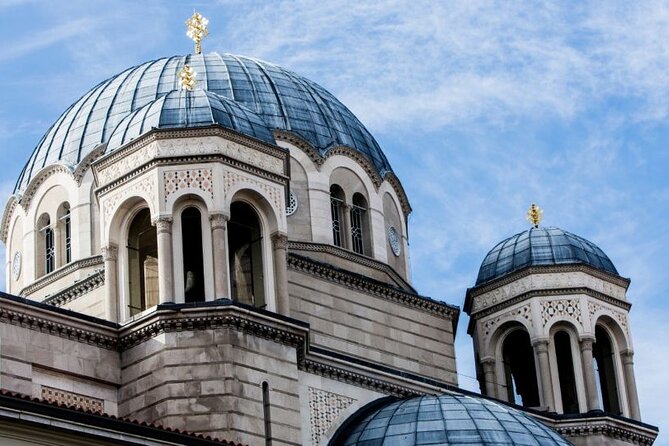
The Serbian Orthodox Church of Saint Spyridon was built between 1861 and 1869 for Trieste’s Serbian Orthodox community. That community played an important role in the city’s commercial and cultural life, particularly in the 18th and 19th centuries, when Trieste was a major port under the Habsburg Empire.
The stop is allotted 15 minutes, and admission is not included. The church’s place in the route offers a reminder that Trieste’s past was shaped by communities with different religious and cultural traditions. This is a meaningful contrast with the Roman sites and the civic squares.
If you want to enter, check access and admission separately. The phone activity provides information about the monument, but it does not include a personal guide or promise an interior visit.
Finish by Canal Grande
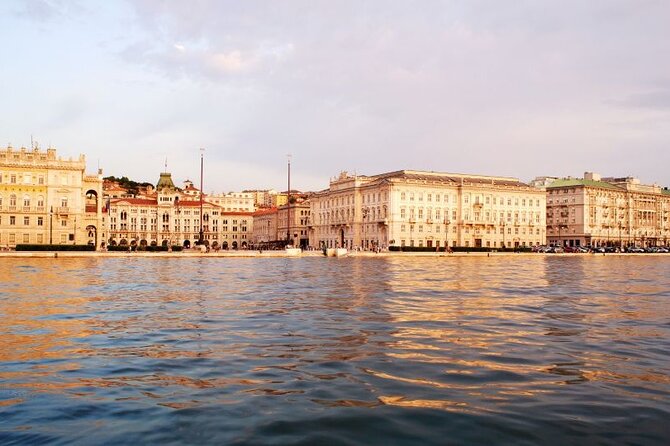
Canal Grande was built between 1754 and 1756, when Trieste was a free port under the Habsburg Empire. It gives the walk another view of the city’s development, connecting the route’s grand public spaces with the period when trade and port activity helped shape Trieste.
The canal stop is free and allotted 15 minutes. It is the final named landmark, while the activity information says the tour ends back at the meeting point near San Giusto Cathedral. Follow the phone directions for the return rather than assuming the last stop is also the finish.
Taken together, the route covers Roman Trieste, civic and commercial squares, an opera house, an Orthodox church, and a canal from the Habsburg period. It is a broad introduction rather than an in-depth visit to any single place. That is a fair trade for a short, inexpensive walk.
What $9.66 buys you
At $9.66 per person, the main value is not access to paid attractions. It is the ready-made route, the monument notes, and the quizzes that give the walk a bit of purpose. If you were already planning to see these landmarks, the activity can help you connect them without paying for a private human guide.
The price is especially reasonable for people who like to explore independently but do not want to spend time researching every stop in advance. A Hungarian-language review describes the appeal as a playful outing without fixed constraints, with clear directions and quiz questions at a very low cost. That matches the practical strength of this format: structure when you want it, freedom when you do not.
The rating is listed as 5 out of 5, based on just three reviews. That is encouraging, but it is a small sample, so I would weigh the concrete features more heavily than the score. The route, language choices, and included content are clear; the depth of the phone material and the exact app experience are not described in detail.
Remember to budget separately for any entry you choose to pay for. Admission is not included at the Castle of Saint Giusto, Teatro Lirico Giuseppe Verdi, or the Serbian Orthodox Church of Saint Spyridon. The other listed stops have free admission.
Is this the right way to see Trieste?
I would choose this activity if I wanted an affordable introduction to central Trieste, preferred setting my own pace, and enjoyed small quiz questions along a walking route. It should also suit anyone who wants help choosing what to see, without booking a guide or arranging a group departure.
It is less suitable if you want a person to answer questions, an audio narration, or a detailed account at every stop. The experience is phone-based, and the stop descriptions appear designed for a short visit rather than an extended guided tour. You will need to be comfortable reading on your phone as you move between landmarks.
The route is described as private, meaning only your group participates, but it is not a private guided walk. You are following the activity on your own device. If that distinction suits you, the combination of Roman ruins, civic landmarks, church architecture, and a Habsburg-era canal makes this a sensible way to spend one to two hours.
You can cancel for a full refund up to 24 hours before the start time. Cancellations made less than 24 hours ahead are not refundable, and changes within that window are not accepted.
FAQ
How long does the Trieste phone tour take?
The estimated duration is one to two hours. Each of the eight stops is allotted about 15 minutes, or roughly two hours if you spend the full suggested time at each one.
Where does the activity start and end?
It starts at Cattedrale di San Giusto Martire, Piazza della Cattedrale 2, and ends back at the meeting point.
Is there a personal guide or audio tour?
No. The activity is accessed on your smartphone and includes quizzes and guides with information about each monument. It is not an audio tour and does not include a personal guide.
Which languages are available?
The activity is available in English, French, German, and Spanish.
Are monument entrance tickets included?
No. Entrance tickets are not included. The Castle of Saint Giusto, Teatro Lirico Giuseppe Verdi, and Serbian Orthodox Church of Saint Spyridon are marked as not including admission. The other listed stops are free.
Can I cancel for a refund?
You can cancel at least 24 hours before the start time for a full refund. Cancellations or changes made less than 24 hours before the experience are not accepted for a refund or change.
Recently added in Trieste
- Venice from Trieste Port – Transfer or Tour for Disembarking Ship★ 4.5 · 9 reviews
- Transfer from Trieste cruise terminal to Venice★ 4.0 · 13 reviews
- Trieste Walking Tour with Audio and Written Guide by a Local★ 4.5 · 73 reviews
- Trieste Private Walking Tour with a Local★ 4.5 · 52 reviews
- Private Transfer Trieste Port to Venice Marco Polo Airport / City★ 4.5 · 29 reviews
- Short daily trip from Trieste to Postojna cave★ 5.0 · 5 reviews
- Small-Group Transfer from Trieste City to Trieste Airport★ 5.0 · 11 reviews
- Experience Trieste★ 5.0 · 106 reviews
Trieste Tours, compared.

Miramare Castle & Museum Entry Ticket & Audio App
Read our review →


Browse the lists this tour appears in