
Reviewed · ST MARK'S BASILICA TOURS
Doge’s Palace & St. Mark’s Basilica with Terrace Access Tour
At St. Mark’s Basilica, the terrace brings you close to the famous bronze horses and gives you a view over the lagoon and St. Mark’s Square. Then the tour shifts from church to state power at the Doge’s Palace, where the Bridge of Sighs leads to the New Prisons. It’s a compact way to connect two landmarks that tell very different parts of Venice’s story.
I like the terrace access, which adds an unusual view and a closer look at the horses, and the guided route through the palace, where frescoed chambers and the prison crossing make more sense with context. One consideration: three hours is a brisk visit, and stairs at both sites can be steep or narrow.
- Look up close at the bronze horses: The basilica’s first-floor terrace puts you near these famous sculptures and opens views across the lagoon.
- Use priority entry at the Doge’s Palace: It can save time at a major sight, though it applies to the palace, not necessarily every part of the tour.
- Cross the Bridge of Sighs: See the enclosed passage between the palace and the New Prisons, then learn why it was built.
- Choose private or shared: Both formats are available, but language choices can differ by option.
- Plan for stairs and dress rules: The basilica terrace route includes steep, uneven steps, and shoulders and knees should be covered inside the church.
Two landmarks, two sides of Venetian power
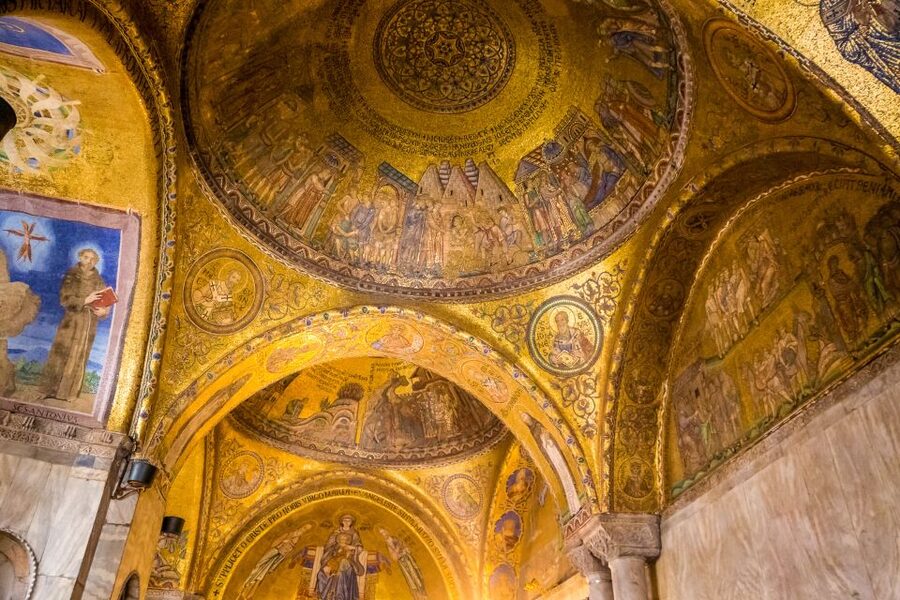
This three-hour tour brings together the spiritual heart of St. Mark’s Square and the former seat of the Venetian Republic. That pairing is useful: the basilica shows Venice’s religious and artistic ambition, while the Doge’s Palace reveals the political machinery behind the city’s long life as a mercantile power.
Your guide begins in the square, setting the scene before you enter the basilica. Venice’s origins on a lagoon are part of the story, including why people began building there in the 5th century. A guide can connect the city’s unusual setting to the choices that shaped it, rather than leaving you to puzzle over the history between photo stops.
The tour is offered as a private or shared group experience. A private guide may suit you if you want a more personal pace, while a shared group can be a practical way to see the highlights with a guide at a lower level of exclusivity. The listed price is $123.48 per person. That is a substantial outlay for three hours, but it includes a guide, priority entrance to the palace, and a ticket for the basilica’s first floor and terrace. Its value is strongest if you want context and a clear route through the city’s most important sights, not simply entry tickets.
Guide assignments vary. Federica, Elena, Matteo, Chiara, Francesca, and Luigina are among the guides who have led tours. The qualities to look for are clear explanations, a steady pace, and a guide who can keep a large subject understandable. The tour’s subject matter is dense, so a lively guide can make the difference between a string of rooms and a story you can follow.
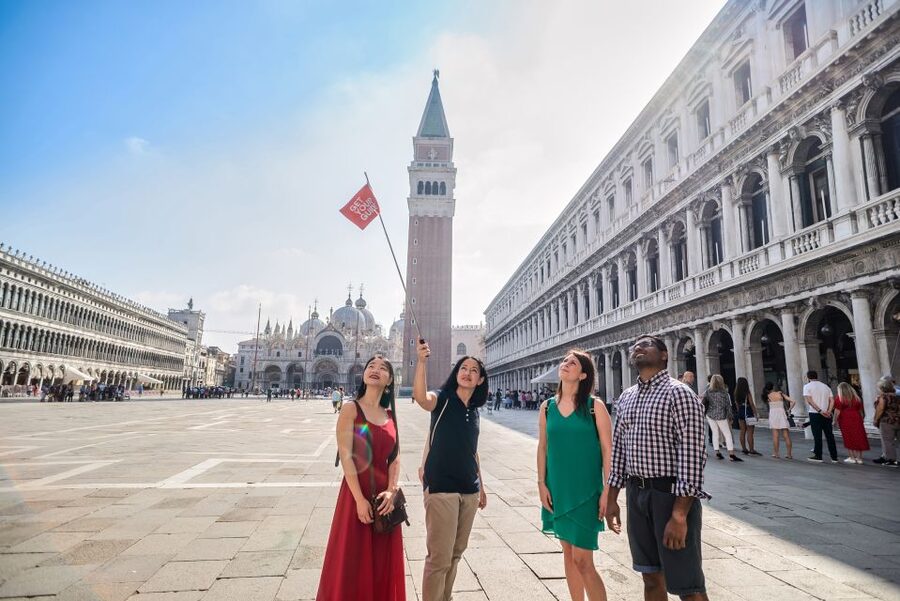
St. Mark’s Square before the basilica
The first stop is the square itself. It is more than a grand forecourt: your guide uses it to introduce the setting and the city’s history before taking you inside. This is a good moment to listen closely. Once you enter, the basilica’s decoration can pull your attention in every direction.
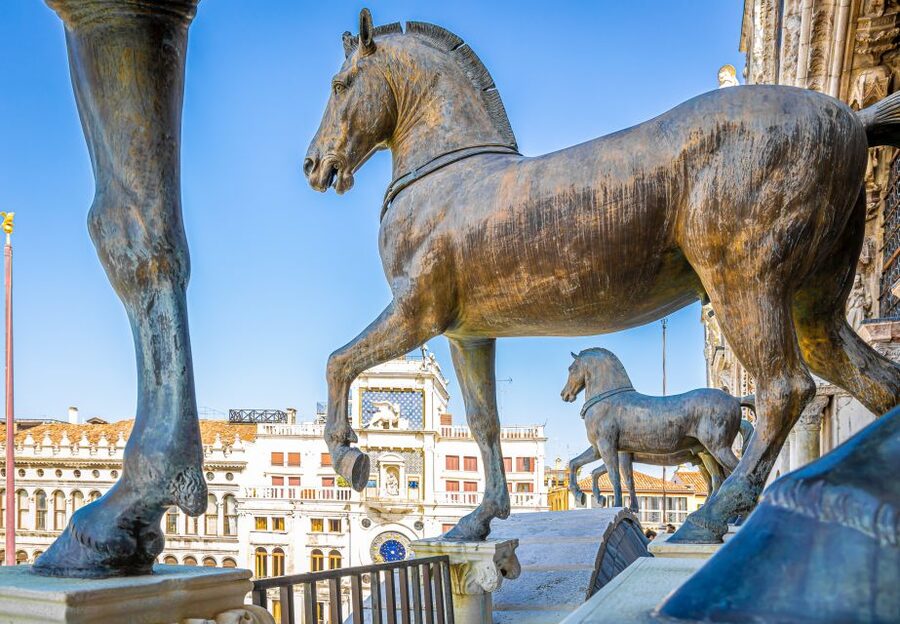
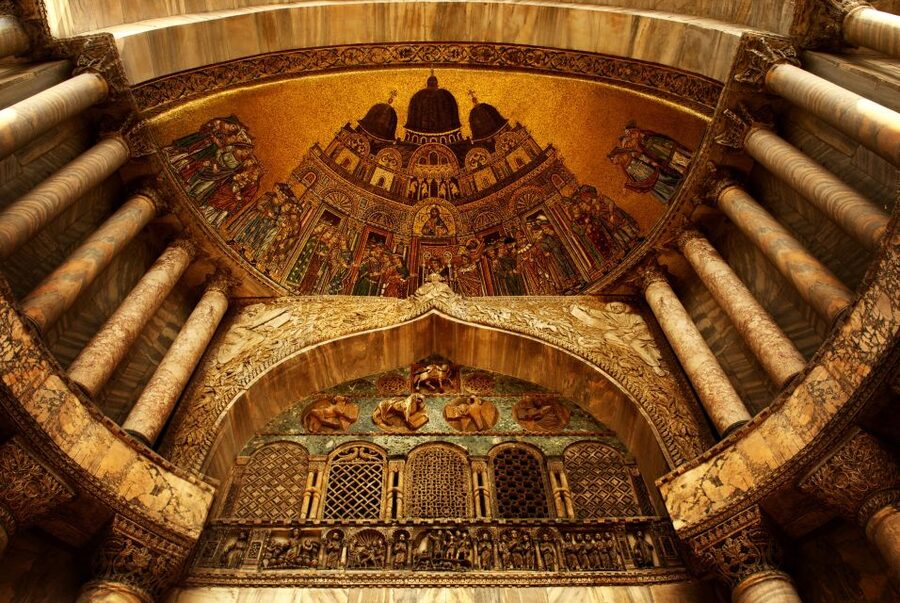
The interior is known for its ornate appearance, and the guide helps you read what you are seeing instead of merely admiring the surfaces. You’ll also hear about the bronze horses, including their journey to Paris and return during Napoleon’s time. Their history gives the sculptures a life beyond their role as an architectural detail.
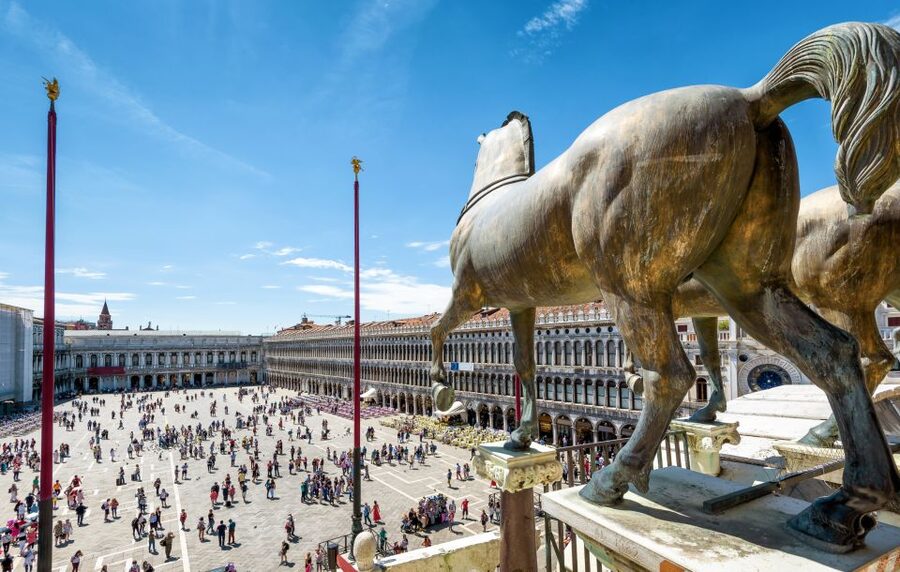
The first-floor terrace is one of the tour’s particular draws. From there, you can look across St. Mark’s Square and the lagoon, while seeing the horses at close range. It is a different experience from viewing the basilica only from below, and the elevated perspective helps you take in the scale of the square.
The terrace route comes with a physical caveat. The stairs to the upper part of the basilica, including the museum and terrace, are steep and can be uneven. This tour is not suitable for wheelchair users, and it may be uncomfortable if you have poor balance or trouble with stairs. If you have knee or hip problems, weigh that carefully before booking.
St. Mark’s Basilica can close to visitors at short notice. If that happens, the tour visits either the 15th-century Church of San Zaccaria and its flooded crypt, or the Correr Museum, depending on availability. These alternatives offer a different view of Venice: San Zaccaria brings you to another notable church, while the Correr Museum focuses on the city’s art and history. Neither is the same as seeing St. Mark’s, so treat the substitution as a practical contingency, not a guaranteed equivalent.
More St Mark's visits around Venice:
- Venice: Doge’s Palace, St Mark’s Basilica, and Pala d’Oro
★ 4.4 · 6,235 reviews - Legendary Venice: Doge’s Palace, St Mark’s & VIP Terrace Access
★ 4.5 · 5,033 reviews - Venice: Doge’s Palace and St. Mark’s Basilica Tour
★ 4.5 · 3,734 reviews
Inside the Doge’s Palace
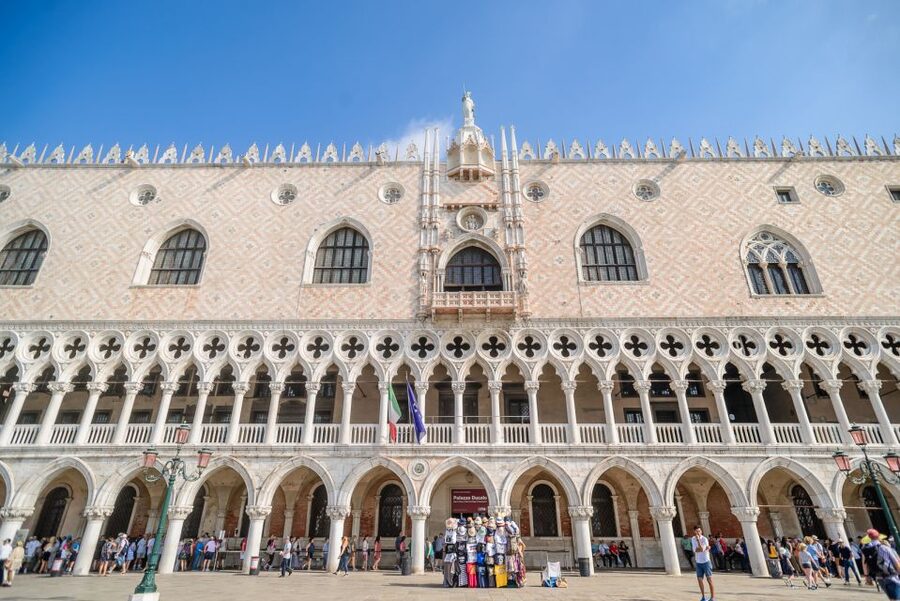
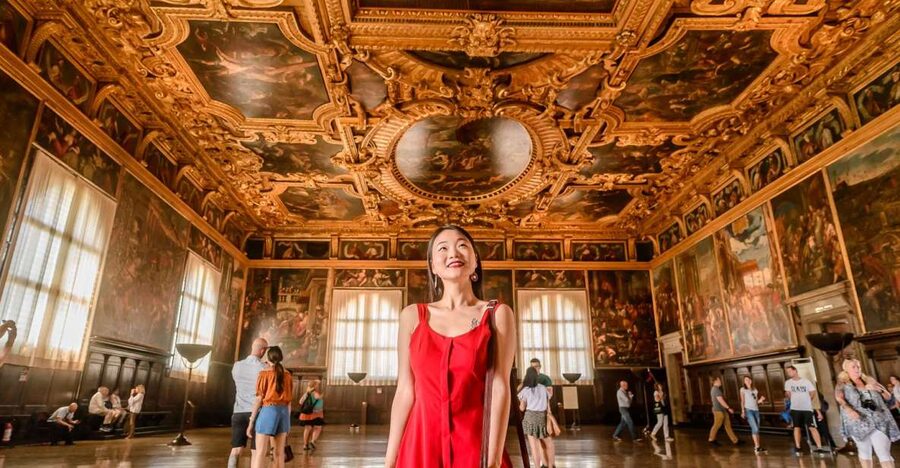
After the basilica, the tour moves to the Doge’s Palace, once the residence of the leader of the Venetian Republic. The palace also housed government and court functions, which makes its rooms more than a procession of decorated interiors. You’ll visit spaces including the Chamber of the Great Council and courtrooms, with the guide explaining how the building served the state.
Priority entrance is included for the palace. That can be a real help at a high-demand sight, saving time and energy for the rooms themselves. It does not mean you should expect every queue in Venice to disappear, and it is worth distinguishing the palace entry benefit from access arrangements at the basilica.
The palace rewards attention to its decoration. Look for the large-scale frescoes, including work by Tintoretto, and notice how the building’s art sits alongside the business of government. The Giants’ Staircase is another highlight. Your guide can help explain why such a ceremonial route mattered in a palace where authority had to be seen as well as exercised.
Three hours is enough to cover the tour’s main sites, but it is not a leisurely, room-by-room visit to everything. Some people find the palace segment moves quickly, especially if entry is delayed or the site is crowded. The tour’s advantage is that you get a guided overview and can return to explore the palace on your own afterward. The activity ends back at the meeting point, but you are welcome to stay inside the palace and continue at your own pace.
The Bridge of Sighs and the New Prisons
The route across the Bridge of Sighs links the palace to the New Prisons. It is one of Venice’s most familiar sights, but crossing it gives the structure a practical purpose beyond its fame. Your guide explains why it was built in the 17th century and how it connected the courtrooms with the prison.
The passage is enclosed, and the mood changes as you move from the palace’s ceremonial rooms toward the prison side. The tour also includes the New Prisons, where you can understand the bridge as part of a working system of justice and confinement. The canal views add a striking contrast to the route, though the narrow prison stairs can be difficult for anyone who is unsteady on their feet.
This is a useful stop for a broader reason. Venice’s history is often presented through palaces, churches, and canals, but the bridge makes the city’s government and justice system tangible. It is a memorable sequence, though the overall visit is still paced as a group tour, not an extended exploration of every cell or chamber.
The pace, price, and practical details
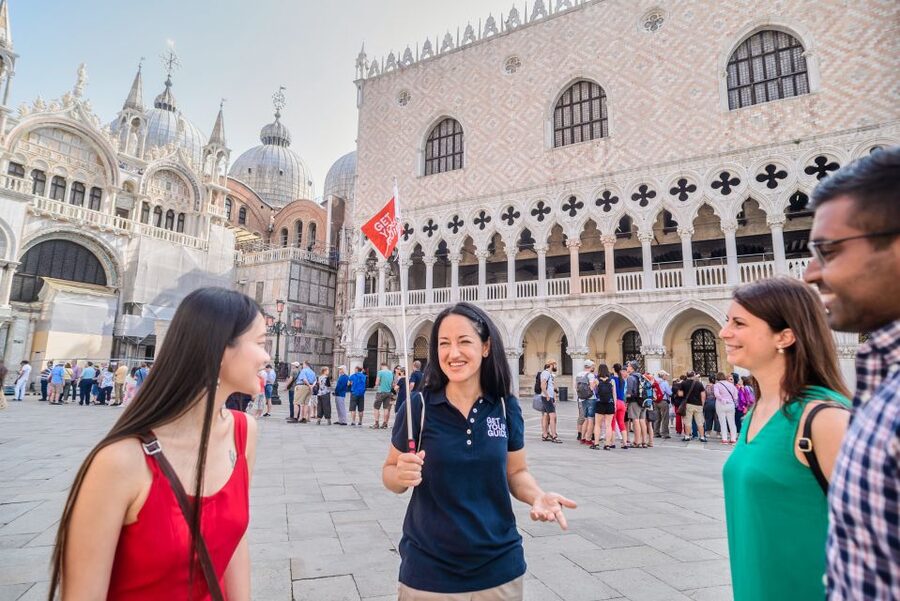
At three hours, this is a concentrated introduction rather than a full day of sightseeing. That time limit works well if you have a short stay or want a structured first visit. It can feel tight if you like to linger over artwork, take frequent breaks, or explore each room in depth. One useful approach is to treat the guided portion as an orientation, then stay at the palace afterward if you want more time.
At $123.48 per person, the price makes most sense if you value a guide’s explanations and the included terrace access. The guide helps connect the basilica, palace, bridge, and prisons into a single account of Venetian life. Priority palace entrance also has practical value when queues are long. If you mainly want to see the interiors at your own speed, compare the cost with visiting independently before you commit.
The meeting point can vary with the option you book. Read the exact meeting instructions closely and allow time to get there. The tour starts with several groups or options being organized, and confusion over the meeting location can create needless stress. Bring a passport or ID card: the Doge’s Palace asks visitors over 13 to show identification.
Leave luggage and large bags behind. Backpacks and large bags are not allowed inside St. Mark’s Basilica, and luggage is not permitted on the tour. For the church, wear clothing that covers your shoulders and knees. Shared and private tours may not offer the same languages, so check the language attached to the specific option you want rather than assuming every format is available in English, Spanish, Italian, French, or German.
More Doge's Palace tours around Venice:
- Venice: Doge’s Palace Reserved Entry Ticket
★ 4.6 · 42,716 reviews - Venice: St. Mark’s Basilica & Doge’s Palace Tour with Ticket
★ 4.7 · 3,375 reviews - Venice: St Mark’s Basilica, Doge Palace, & Bell Tower Option
★ 4.5 · 2,633 reviews - Venice: Doge’s Palace, Bridge of Sighs & Prisons Guided Tour
★ 4.3 · 2,549 reviews
Who will get the most from this tour
I’d consider this tour a good fit if you want to understand Venice’s landmark sights without having to build the route and historical context yourself. It suits first-time visitors, families with older children who can manage the walking and stairs, and anyone who prefers stories and explanation over a self-guided visit. The guides have been praised for using humor and anecdotes, keeping information clear, and adjusting their pace to the group.
It can also work for a family with an older relative, provided the person is comfortable with the stairs. A guide may be able to take individual needs into account, but the physical route remains the same. The steep basilica steps and narrow stairway around the prison make this a poor choice if mobility is limited.
If you want a slow, quiet visit or need a long pause between the basilica and palace, a three-hour group schedule may feel restrictive. The bathroom break between sites can also be short, so plan ahead. And if seeing St. Mark’s Basilica is your one non-negotiable goal, remember that it can close without warning and that the replacement visit will be San Zaccaria or the Correr Museum.
Should you book it?
Book this tour if you want a guide to connect St. Mark’s Basilica, the Doge’s Palace, and the Bridge of Sighs in one compact visit, and if terrace access matters to you. The palace priority entrance and the option to stay afterward make the price easier to justify for a history-minded visitor.
Skip it if you cannot manage steep stairs, need a wheelchair-accessible route, or prefer to set your own pace throughout. Before paying, confirm your meeting point, language, and tour format. Those small checks help ensure the three hours are spent looking at Venice, not searching for the group.
FAQ
How long is the tour?
The tour lasts three hours. Starting times depend on availability.
What languages are offered?
The tour is offered in Spanish, Italian, French, German, and English. Language availability can differ between private and shared options, so check the specific option before booking.
Is terrace access at St. Mark’s Basilica included?
Yes. The included ticket provides access to the basilica’s first floor and terrace.
What happens if St. Mark’s Basilica is closed?
Depending on availability, the tour visits the Church of San Zaccaria and its crypt, or the Correr Museum.
Can I stay at the Doge’s Palace after the guided tour?
Yes. You are welcome to remain in the palace and explore at your own pace after the guided portion.
What should I bring, and what is not allowed?
Bring a passport or ID card. Luggage, large bags, and backpacks are not allowed. Inside St. Mark’s Basilica, clothing should cover your shoulders and knees.
Recently added in Venice
- Venice: Basilica and Doge’s Palace Tour with Gondola Ride★ 4.4 · 85 reviews
- Cicchetti & Concert in Venice★ 3.7 · 7 reviews
- Chioggia-Venice: Day&Night Boat Transfer Round-Trip or 1-Way★ 4.5 · 11 reviews
- Venice: Byzantine Tour and Skip-the-Line St Mark’s Basilica★ 4.8 · 8 reviews
- Venice: Venetian Style Carnival Pub Crawl★ 3.5 · 73 reviews
- Venice to Padua Full-Day Brenta Riviera Boat Cruise★ 4.3 · 118 reviews
- Biennale Architettura 2025 Intelligens Naturale Artificiale★ 4.8 · 4 reviews
- Arte Di Murano: Glass Factory Tour★ 4.5 · 7 reviews
St Mark's Basilica Tours, compared.
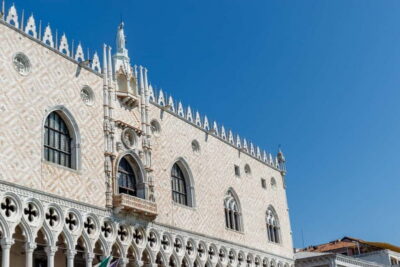
Doge’s Palace, St Mark’s Basilica, and Pala d’Oro
Read our review →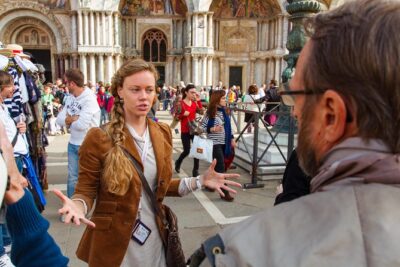
Legendary Venice: Doge’s Palace, St Mark’s & VIP Terrace Access
Read our review →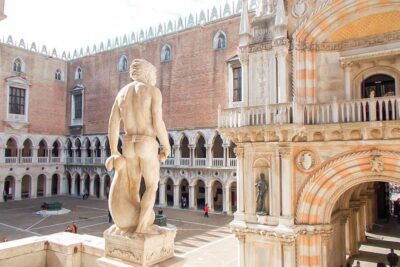
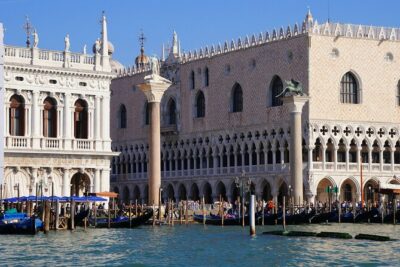
Private 3 hrs Venice Tour: St Mark’s, Walking tour & Boat tour
Read our review →
St Mark’s Basilica, Doge Palace, & Bell Tower Option
Read our review →
Venice’s Best: Basilica, Doge’s Palace, Gondola & History Gallery
Read our review →
Doge’s Palace & St Mark’s Tour with Upgrade Option
Read our review →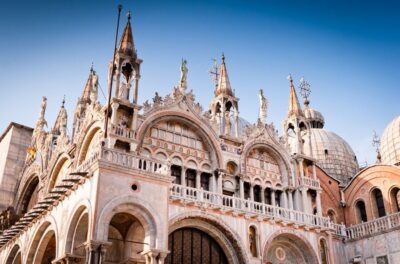
Skip the Line: St. Mark’s Basilica Guided Tour
Read our review →Browse the lists this tour appears in