
Reviewed · PROSECCO WINE TOURS
Prosecco’s Roots & the Karst Region from Trieste
Prosecco began as a place name, not just a bottle label. This half-day trip from Trieste connects the wine’s namesake village with Štanjel, a hilltop Karst town whose old stone core and Ferrari Garden give the outing more substance than a tasting run alone. I like that you get countryside, local food and a slice of Slovenian history in one manageable day. I also like the small-group cap of 15, which should make the drive and stops feel less like a convoy.
One caution: parts of the route cross into Slovenia, and the wine stop may not be what you picture when you hear Italian vineyard tour. Reports of the tasting experience vary, and there has also been a last-minute cancellation and difficulty confirming pickup details. Confirm the meeting time and what food and wine are included before you set out.
- Prosecco’s namesake village: Learn how a small settlement near Trieste gave its name to a famous sparkling wine.
- A borderland day out: The route takes in the Karst region, including Štanjel and Kobjeglava in Slovenia.
- Štanjel’s hilltop setting: Explore the old village, castle area, Church of St. Daniel and Ferrari Garden.
- Local flavors: Expect a chance to try Karst cured ham, cheese and local wine, though the exact tasting arrangement can vary.
- A compact group: The tour is limited to 15 people, with pickup arranged at an agreed point in Trieste.
- A six-hour outing: The mix of driving, village time and food makes this a full half-day rather than a quick tasting stop.
From Trieste to Prosecco’s Namesake Village
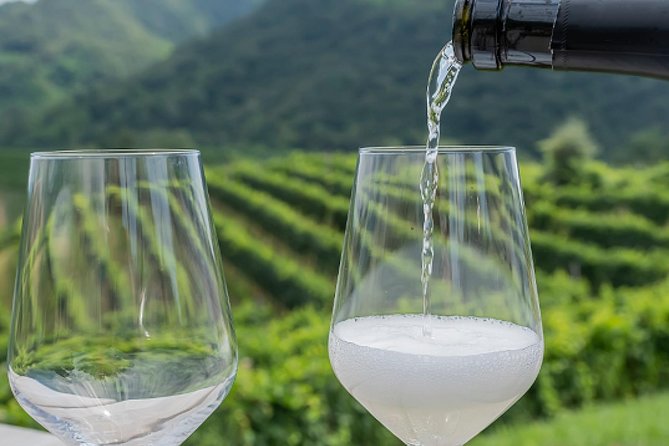
Prosecco is better known as a drink than a place, which makes the village itself an unusual first stop. The village of Prosecco, now part of Trieste, lies close to the Slovenian border and is associated with the Glera grape and the wine’s early origins. The finest forms of Prosecco are made in Veneto, but the name’s roots are here in Friuli Venezia Giulia.
That distinction makes the stop worthwhile even if you already know your way around a glass of sparkling wine. You get a geographic backstory that a wine bar in Trieste cannot provide, and a chance to see the area that helped give the wine its identity. The itinerary allows about an hour for Prosecco, so expect an introduction to the village and its wine history, not a long vineyard walk.
The tour description includes a winery visit and tasting, but the actual tasting setting may vary. One account describes a stop at a local bar, while another describes a winery visit and a glass of Prosecco in the region. A separate outing included a visit to Vina Kobal, a Slovenian winery. The practical point is simple: do not assume that every departure visits an Italian vineyard. Ask the operator where the tasting will take place and what it includes.
This is also the point where the tour’s geography needs a little care. It is sold from Trieste and visits the Italian village of Prosecco, but the Karst route continues into Slovenia. That mix is part of the appeal, but it is not a tour of Italian wine country alone.
Štanjel’s Stone Lanes and Ferrari Garden
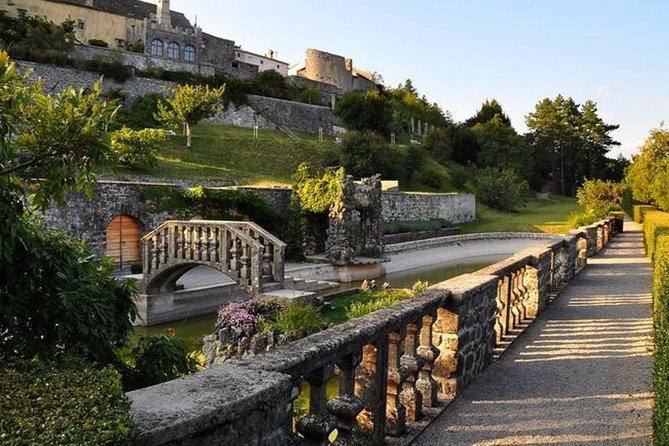
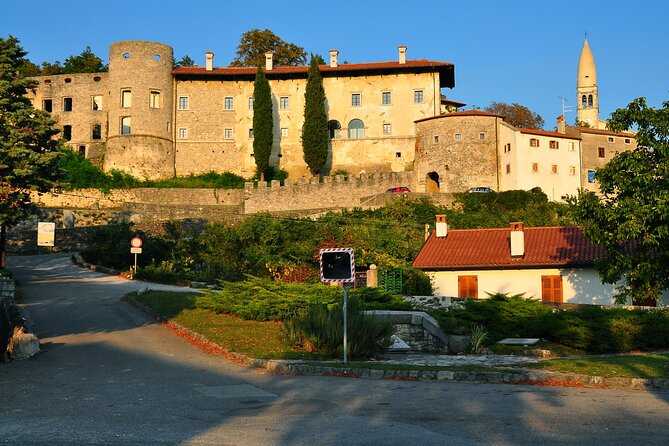
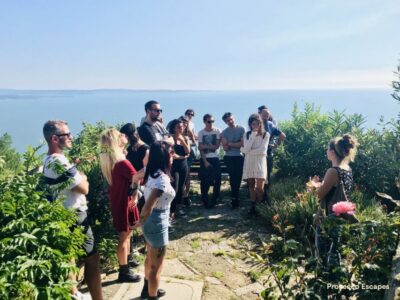
Štanjel is the day’s strongest sightseeing stop. Set on a hill in Slovenia’s Karst region, the medieval village is known for its old centre, defensive walls, castle complex and Church of St. Daniel. The raised setting gives you wide views over the surrounding countryside, a welcome change after driving through the region.
You have about two hours here, enough time to appreciate the town’s layout and the distinct feel of its stone buildings. Štanjel’s character is tied to the wider Karst: a rugged region that crosses borders and has its own architecture, food traditions and history. The town is named for its patron saint, Daniel, and its position on a hill helps explain its historic defensive structures.
The Ferrari Garden is a particular draw. Architect and mayor Maks Fabiani shaped parts of Štanjel during the world wars, working to preserve the village’s character while renewing public spaces. His work at Ferrari Villa and the garden is regarded as an important example of interwar park design in Slovenia. You do not need to be an architecture specialist to enjoy the stop: the garden offers a quieter, more designed counterpoint to the old village and its broad views.
There is a trade-off. Štanjel is a small place, and the appeal lies in looking closely rather than checking off a long list of attractions. If you prefer a day packed with major museums or extensive guided interpretation, this may feel leisurely. If you like a slower walk through a historic village with room to pause, the two-hour stop is well judged.
The tour description calls out the castle complex, walls, church, village and garden, but it does not specify whether every site is entered or visited with a guide. Treat the stop as time in Štanjel rather than a promise of access to each building. You can still get a good feel for the town from its public spaces and viewpoints.
More Prosecco tastings around Trieste:
- Trieste: 2.5-Hour Prosecco Origins Tour and Tastings
★ 4.9 · 193 reviews - Prosecco Origins Wine Experience
★ 5.0 · 79 reviews - Venice Sunset Cruise by Typical Venetian Boat with Prosecco
★ 5.0 · 505 reviews
Karst Food and Wine in Kobjeglava
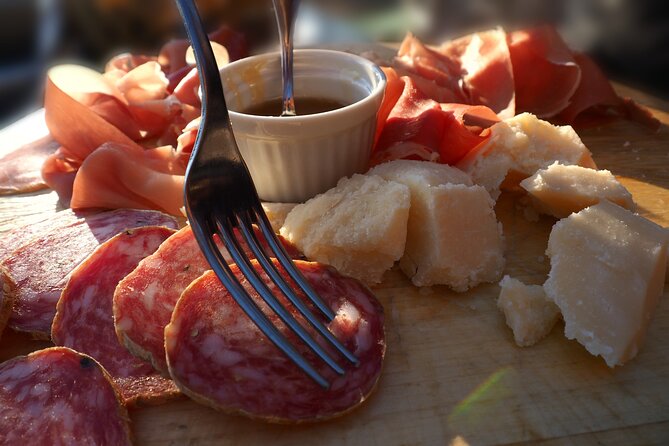
Kobjeglava is included as a stop for local food and drink. The region’s specialties include dry-cured ham, cheese and local wine, and this is where the tour shifts from scenery and history to a taste of the Karst.
Descriptions of the meal differ in scale. Some experiences refer to a light lunch or a generous spread at an agritourism restaurant, while the formal tour details simply say you will have the opportunity to try local delights. One account specifically mentions Vina Kobal, fresh meats and several wine tastings, including red sparkling wine. That gives you a sense of the possible experience, but it is not a guarantee of the same venue, menu or number of pours on every departure.
This uncertainty matters when you compare the price with a simple sightseeing trip. At $155.22 per person, the tour’s value rests on more than the drive: you are paying for pickup, a guide, multiple stops and the chance to sample local food and wine. But if you are counting on a substantial lunch or a particular winery, ask before booking whether food and tasting fees are included. The provided details do not clearly itemize them.
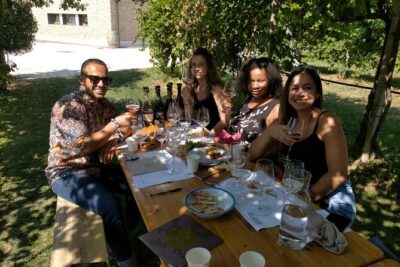
You may also find that the food stop is a social highlight. A shared table of ham, cheese and wine can make a small-group outing feel personal, especially after a morning of village visits. Just keep expectations flexible. The available descriptions range from a light meal to a more generous tasting, so do not plan on a fixed menu without confirming it.
What the Six-Hour Route Feels Like
The tour lasts about six hours and starts with pickup at an agreed location in Trieste. That may be your hotel, the cruise terminal, bus station or train station, but you need to contact the operator after booking to arrange the specific point. This door-to-door setup is useful if you are unfamiliar with local transport or trying to fit the Karst into a short stay.
The route combines driving with stop time, rather than keeping you in one place for the day. The stated schedule assigns about an hour to Prosecco, two hours to Štanjel and an hour to Kobjeglava. The remaining time allows for transfers, though the exact order and timing can depend on the day.
For cruise passengers, the pickup arrangement may be especially convenient, but do not leave the details to the last minute. There has been an instance of a late cancellation and trouble getting a clear meeting time. Contact the provider promptly after booking, and make sure you have a confirmed pickup time and place before travel day.
The group is limited to 15 people. That is small enough to make conversation with the guide easier than on a large coach trip, while still keeping the cost below what a private day tour might command. Group discounts are available, and tickets are mobile. The tour is offered in English.
The drive itself is part of the experience. You move from Trieste into the Karst, with its rugged scenery and villages, rather than spending the day in a single town. One account also describes a stop at the Santuario di Monte Grisa, a hilltop sanctuary overlooking the area. That stop is not part of the stated itinerary, so treat it as a possible variation, not a promised feature.
The Guide Can Shape the Day
The experience depends in part on who leads it. Guides named in accounts of this tour include Dean, Ernest and Matthew. They were described as personable and flexible, and their enthusiasm for the area helped turn the route into more than a series of stops. You cannot count on a particular guide, but a good guide matters here: the Karst’s history, borders and wine traditions are easier to appreciate with context.
The best version of the day seems to balance explanation with free time. You want enough background to understand why Prosecco and Štanjel matter, but not so much commentary that the garden and views become a hurried lecture. If you have particular interests, such as wine production, local architecture or the region’s border history, ask your guide about them along the way.
There is a less favorable possibility, too. One account describes a guide focusing heavily on property sales and refusing requests to stop for food. That sounds far from the intended experience, but it is a reminder to speak up if the day is not matching the plan. Ask about breaks, tasting arrangements and the route before departure, especially if you have limited time or dietary needs.
Same lagoon, a different plan:
- Trieste Bus Tour with Audio Guide
★ 4.5 · 1,648 reviews - Trieste Bus Tour with Audio Guide
★ 4.0 · 214 reviews - Trieste: Miramare Castle & Museum Entry Ticket & Audio App
★ 4.2 · 213 reviews - Lake Bled and Ljubljana Tour from Trieste
★ 4.5 · 193 reviews
Is $155.22 Good Value?
At roughly $155 per person for six hours, this is not a bargain bus ride. It can be fair value if you want pickup in Trieste, transport across the border, a guide and a combination of village sightseeing and food and wine. Arranging those pieces separately would take time, and the tour removes the need to navigate the countryside yourself.
The price is harder to justify if you expect an in-depth vineyard visit, a full lunch and a polished wine program as guaranteed inclusions. The details are not specific enough to promise those elements on every departure. Before booking, ask what tasting fees and food are included, which winery or venue is planned, and whether the route will include any optional stops.
The tour suits you best if you enjoy a relaxed day with several different elements: a little wine history, a medieval village, garden scenery and regional food. It is less suited to someone who wants a dedicated vineyard tour, a detailed wine class or a tightly scheduled visit to a series of major sights.
Who Should Book This Karst Day?
Book it if you are staying in Trieste and want to see beyond the city without arranging a rental car. The route is particularly appealing if you enjoy small historic towns and want to understand how the Karst connects Italian and Slovenian culture. The food and wine add a local dimension, while Štanjel gives the day a clear visual highlight.
Think twice if you are choosing this specifically for a high-end Italian winery experience. The route crosses into Slovenia, and the tasting venue and meal may vary. If wine production is your main reason for booking, confirm the precise venue and what is included before paying.
Overall, I would choose this tour for its mix of Prosecco’s origins, Štanjel’s setting and a taste of Karst life, not for a guaranteed vineyard visit. Book when you are happy with a flexible countryside day, and confirm pickup and tasting details early.
FAQ
How long is the tour?
The tour lasts approximately six hours.
Where does the tour start and end?
Pickup is arranged at an agreed point in Trieste, such as a hotel, cruise terminal, bus station or train station. The tour ends back at the meeting point.
Which places are included?
The stated stops are Prosecco, Štanjel and Kobjeglava. The route includes the Karst region and crosses into Slovenia for Štanjel and Kobjeglava.
Is a wine tasting included?
The tour description includes a winery visit and a chance to try wine, but it does not clearly specify which venue or whether tasting fees are included. Confirm the details with the operator before booking.
Is food included?
The tour offers the opportunity to try Karst specialties such as dry-cured ham, cheese and local wine. The details do not clearly state whether a full lunch is included.
How many people can join?
The maximum group size is 15 people. Group discounts are available.
Can I cancel for a refund?
You can cancel up to 24 hours before the experience for a full refund. If bad weather or minimum group requirements cause the tour to be cancelled, you will be offered another date or a full refund.
Recently added in Trieste
- Venice from Trieste Port – Transfer or Tour for Disembarking Ship★ 4.5 · 9 reviews
- Transfer from Trieste cruise terminal to Venice★ 4.0 · 13 reviews
- Trieste Walking Tour with Audio and Written Guide by a Local★ 4.5 · 73 reviews
- Trieste Exploration Game and City Tour on your Phone★ 5.0 · 3 reviews
- Trieste Private Walking Tour with a Local★ 4.5 · 52 reviews
- Private Transfer Trieste Port to Venice Marco Polo Airport / City★ 4.5 · 29 reviews
- Short daily trip from Trieste to Postojna cave★ 5.0 · 5 reviews
- Small-Group Transfer from Trieste City to Trieste Airport★ 5.0 · 11 reviews
Prosecco Wine Tours, compared.
Venice Sunset Cruise by Typical Venetian Boat with Prosecco
Read our review →
A Sparkling Day in the Prosecco Hills from Venice
Read our review →
Private Prosecco , Hilltowns & Palladian Villa Tour from Venice
Read our review →
Exclusive Prosecco Wine Tour from Venice – Small Group
Read our review →Browse the lists this tour appears in