
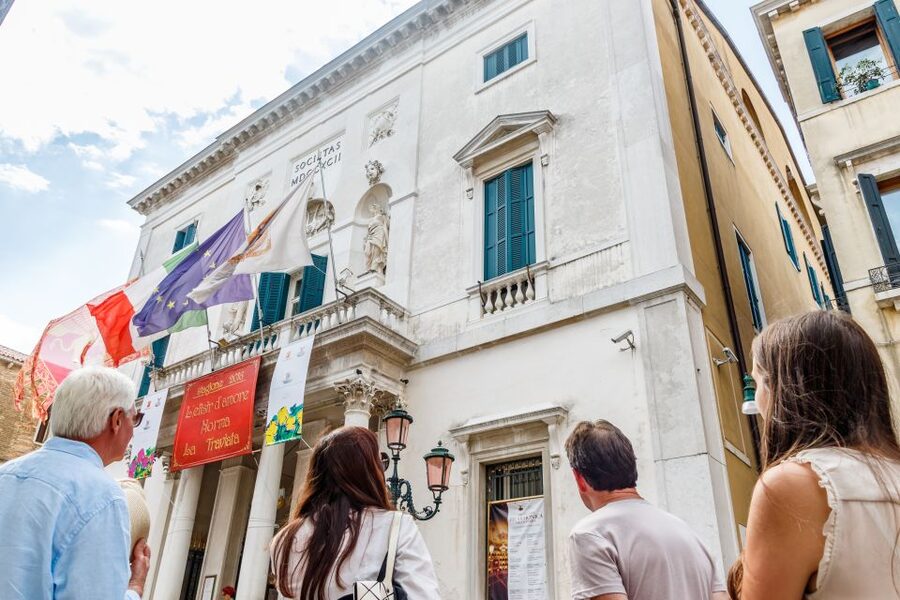
Reviewed · TEATRO LA FENICE TOURS
The Majestic Teatro La Fenice: Guided Tour in Venice
La Fenice is more than a handsome opera house: it is a working theatre with a story shaped by celebrated premieres, rebuilding, and a turn toward contemporary opera. In an hour, you step inside its ornate rooms and hear how the place works as well as what has happened on its stage.
I like two things in particular: the chance to see the royal box and other richly decorated rooms, and a guide who can connect the building to operas by Rossini and Bellini, as well as newer works. Guides such as Sara, Marina, Matilda, Nicole, and Sabin have led visits, though your guide will depend on the day.
One consideration: La Fenice is an active theatre, so rehearsals, lighting tests, or other work can limit what you see. The tour is not wheelchair accessible, and at least one tour has been delivered in both Italian and English, so ask about the language format if that matters to you.
At a glance
- Meet outside the theatre: The guide meets you in front of the entrance. The explanation takes place inside, not on the walk there.
- A compact visit: The guided tour lasts about one hour and ends where it starts.
- See the royal box: Access to the royal box and other rooms has been part of some visits, though theatre activity may affect access.
- Hear about opera across eras: The story covers premieres by Rossini and Bellini, along with later contemporary works.
- Stay after the tour: Your ticket may allow you to remain inside after the guide finishes, giving you time to take in the rooms at your own pace.
- A good fit for culture-minded visitors: You do not need to know opera to follow the guide, but a performance ticket can make the visit feel even more rewarding.
La Fenice, a theatre built for drama
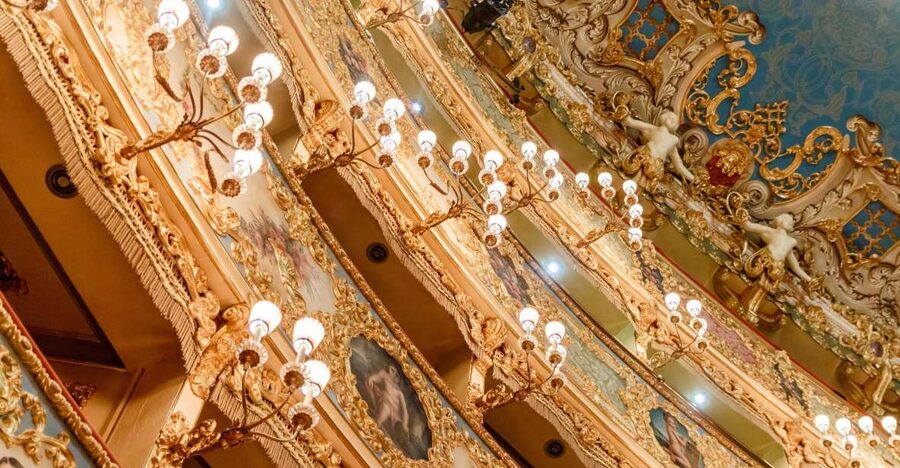
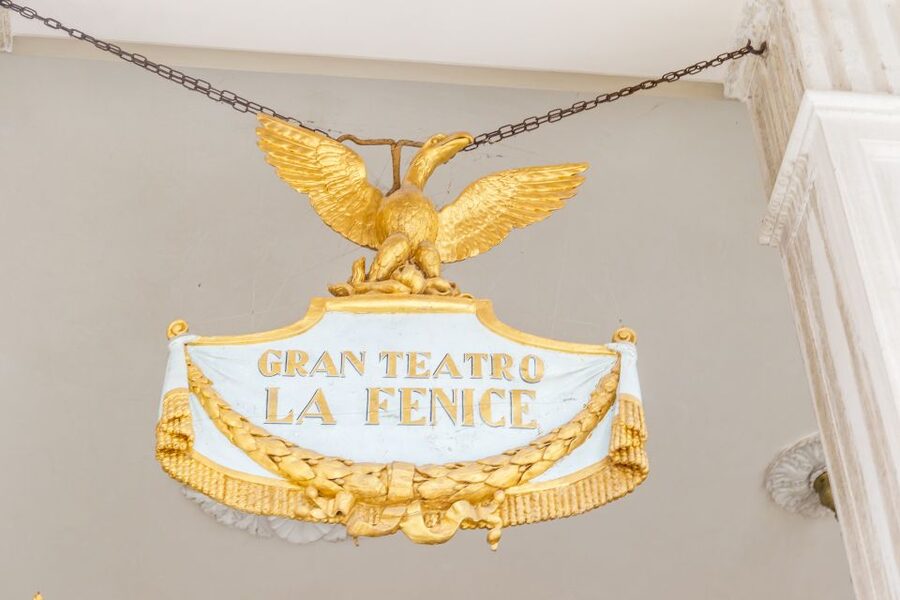
Teatro La Fenice opened at the end of the 18th century and soon became a major stage for new opera. Its name is tied to the theatrical idea of a phoenix, but the building’s story is not only about its past. Today, the theatre also makes room for contemporary productions and new work.
That mix gives the guided visit a useful balance. You hear about celebrated composers and premieres, but the theatre does not feel frozen in a museum version of its glory days. It remains an active performance venue, with a large local audience and an international following.
La Fenice can seat more than 1,000 people. Its scale helps explain why this is not simply a pretty room with a famous name: it is built for a large audience, a 98-member orchestra, and a 66-person opera chorus. Even without hearing a performance, you can picture the practical demands of filling the space with music.
More La Fenice tours around Venice:
- Venice: La Fenice Opera House Entry Ticket with Audio Guide
★ 4.6 · 11,742 reviews - Teatro La Fenice Tour in Venice
★ 4.0 · 191 reviews - Venice: La Fenice Theater Tour
★ 4.8 · 5 reviews
Meeting outside, then heading indoors
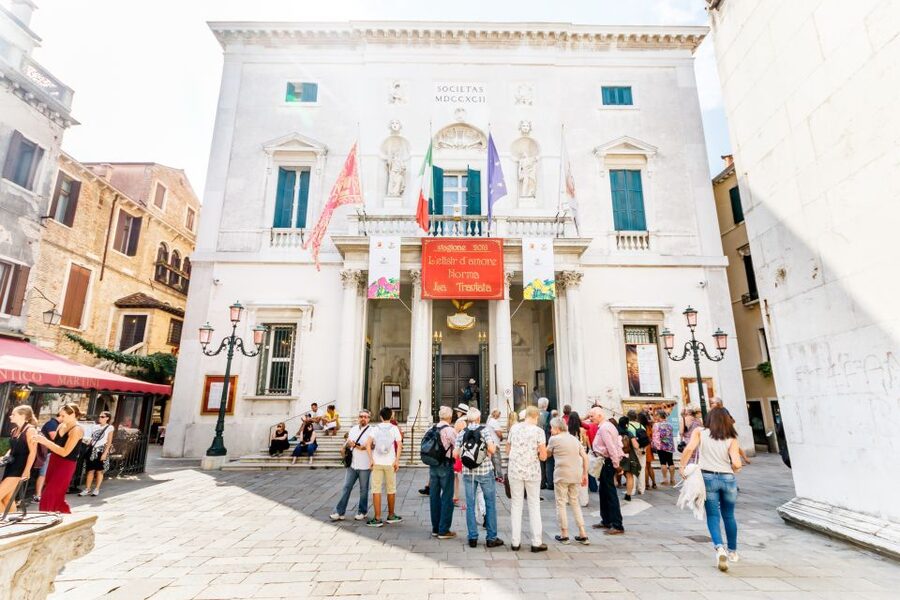
The meeting point is directly in front of the theatre entrance. Arrive with a little time to spare, especially if you are still finding your way through Venice’s lanes. The guide’s explanation starts inside, so do not expect a walking tour of the surrounding area.
The whole visit lasts about an hour, and you return to the meeting point at the end. That makes it easy to fit between other plans, but the short format also means the guide has to choose what to emphasize. If you want a long architectural study or access to backstage areas, this is not that kind of visit.
The tour is conducted in English according to its stated language. Still, a visitor has encountered a tour given in both Italian and English and felt the English portion was shorter. If you need an English-only explanation, check the language arrangement before booking rather than assuming every session follows the same format.
Inside the auditorium and its ornate rooms
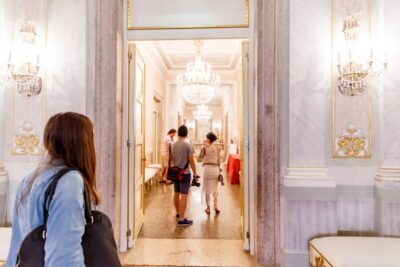
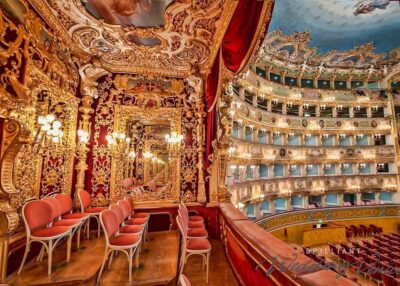
The main reward is the interior. La Fenice is sumptuous, with a sense of ceremony that begins as soon as you enter. The guide helps you look beyond the general impression of splendour and notice how the building serves opera: the auditorium, the performance spaces, and the rooms where theatre life unfolds.
The royal box is a particular highlight when it is open. Seeing the theatre from this vantage point gives you a better feel for the room’s scale and its formal arrangement. It also turns the idea of a night at the opera into something concrete: you can picture the audience gathering, the orchestra below, and the performance taking command of the room.
Some visits have also included several large rooms and an exhibition about Maria Callas. Access can vary, so treat these as possible parts of the visit rather than guaranteed stops. The same goes for seeing a rehearsal. If one is under way, you may catch a glimpse of the theatre at work, but the schedule is not something the tour can promise.
One small detail worth noticing is the ceiling clock, which visitors have found especially striking. The guide can help make sense of the room’s design and details, though you will want a little time to look around for yourself. Some tours allow you to remain inside after the guided portion, a welcome chance to take in the atmosphere without having to keep pace with a group.
Opera history, from Rossini and Bellini to new work
The guide puts La Fenice’s past in context through the operas that premiered here. Rossini’s Tancredi, Sigismondo, and Semiramide are among the works associated with its stage. Bellini’s The Capulets and the Montagues and Beatrice di Tenda add another chapter to the theatre’s role in Italian opera.
You do not need to arrive knowing the plots or the composers. A good guide can translate a list of titles into a clear account of why premieres mattered and how a theatre earned its place in the cultural life of Venice. The strongest part of the visit is often the storytelling: guides including Sara, Nicole, Marina, Matilda, and Sabin have been singled out for clear explanations, friendly manner, and willingness to answer questions.
The story continues into the modern era. La Fenice has hosted world premieres of Stravinsky’s The Rake’s Progress and Britten’s The Turn of the Screw, and the theatre now puts special emphasis on contemporary productions. That point matters: you are not just touring a relic of the past, but a venue that still takes artistic risks.
If you have tickets for an opera on the same evening, the tour can add helpful context before the curtain rises. You will recognize the setting and understand more about the theatre’s place in the work’s history. It is also worthwhile if you are not attending a performance, since the building and its stories carry the visit on their own.
More guided departures around Venice:
- Murano & Burano Islands Guided Small-Group Tour by Private Boat
★ 4.5 · 7,580 reviews - Venice Islands: Murano Glass & Burano Colors Guided Visit
★ 4.5 · 4,581 reviews - From Venice: Murano & Burano Guided Tour by Private Boat
★ 4.7 · 4,170 reviews - Venice: Street Food Tour with a Local Guide and Tastings
★ 4.8 · 2,613 reviews
How the one-hour route feels
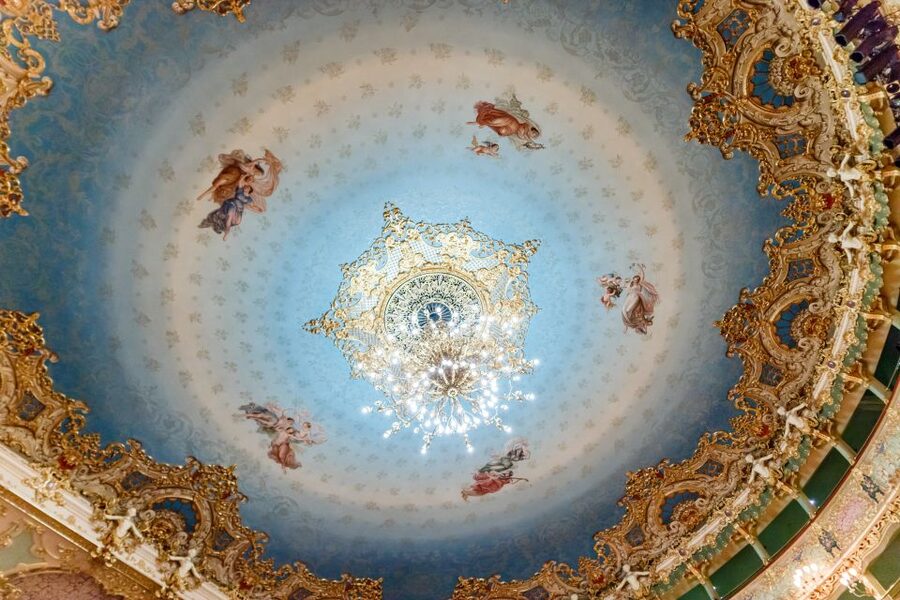
The pace is brisk but manageable. You meet outside, enter with the guide, and spend the hour hearing about the theatre while moving through the areas available that day. Expect the focus to be on the building’s history, its rooms, and how performances are organized, rather than a lengthy technical tour of stage operations.
The guide is central to the experience. A clear storyteller can make the history accessible even if opera is new to you, and the small-group format described by some visitors can make it easier to ask questions. Group sizes are not specified, however, so do not count on a private or small-group tour.
There can be practical interruptions. Theatre testing or other work has sometimes meant that access to parts of the building changes, with the guide adjusting the route. That is a natural trade-off when visiting an active performance venue. If you would be disappointed by anything less than full access, keep your expectations flexible.
A few visitors have wished they could go backstage. The tour does not promise backstage access, so plan on seeing public and visitor-accessible areas rather than the working machinery behind a production. If you happen to catch a rehearsal, consider it a lucky extra, not part of the standard itinerary.
Is $28 good value?
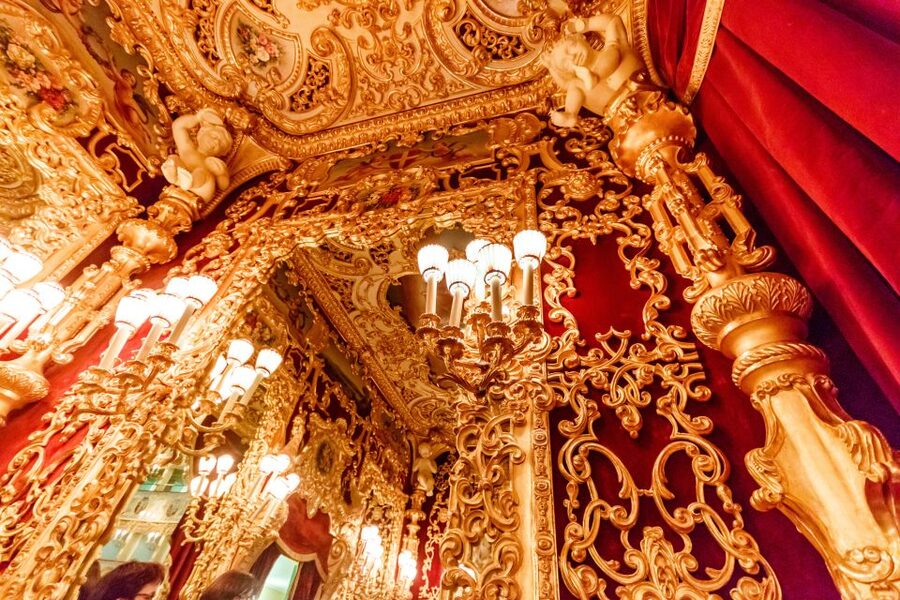
At $28 per person for an hour, this is a reasonable buy if you want more than a quick look inside. The guide supplies the context that a self-guided visit cannot: how the theatre’s opera history developed, what makes its performance programme significant, and how the rooms relate to the experience of attending a show.
The price is easier to justify if you are curious about opera, architecture, or Venice’s cultural life. It is also a sensible choice if you already have a performance booked, since the visit can make the theatre feel more familiar before you return for the evening. For a visitor interested only in a brief photo stop, a guided hour may be more than needed.
The tour includes a guided visit inside the theatre. It does not include an opera performance, and you should not assume that every room or the backstage area will be open. The value rests on the guide, the interior access available that day, and the chance to hear the history in the place where it happened.
Who should book this tour?

I would recommend it to anyone who wants to see inside one of Venice’s major theatres and hear a lively, grounded account of its past. You do not need to be an opera expert. The guide’s role is to make the setting legible, and the building itself gives you plenty to look at.
It is especially appealing if you have an opera ticket, enjoy historic interiors, or want a short cultural stop that does not consume half a day. Families with older children who enjoy performance and history may also find the hour accessible, though the experience is a guided talk rather than an interactive activity.
Think twice if you need step-free access: the tour is listed as unsuitable for wheelchair users. Also consider whether you are comfortable with changes to access, since theatre rehearsals and technical work may affect the route. If you are, the chance to see the auditorium, royal box, and other rooms while hearing the story behind them makes this a worthwhile hour.
Should you book?
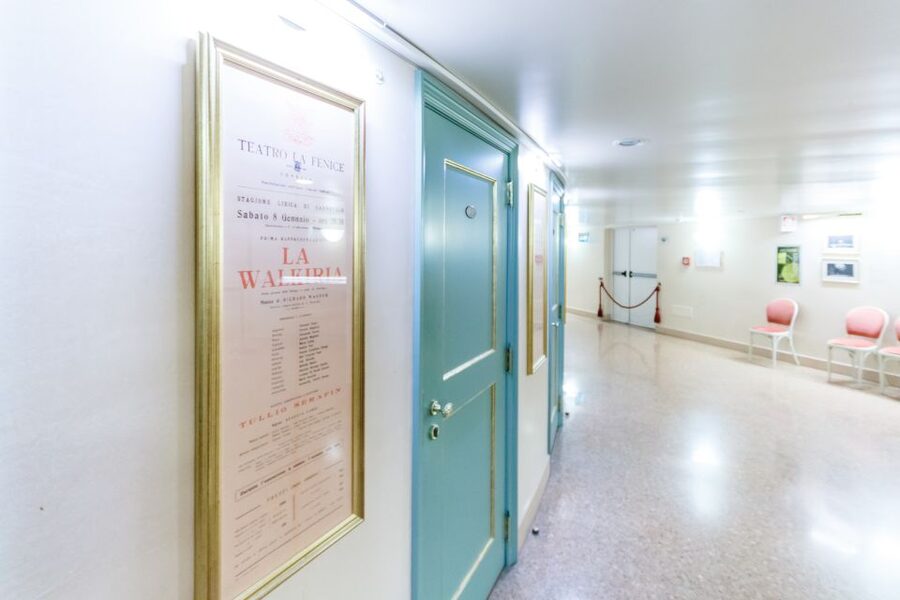
Book La Fenice if you want an informed look inside the theatre and appreciate having its opera history explained in place. The strongest reasons are the ornate interior, the royal box when open, and guides who can connect famous premieres to the theatre’s present-day role.
Skip it if you need wheelchair access, expect a backstage tour, or want a guaranteed view of every room. At $28, it is best value for curious visitors who want the building to mean more than a beautiful interior. If you have an opera performance planned, make time for the tour beforehand.
FAQ
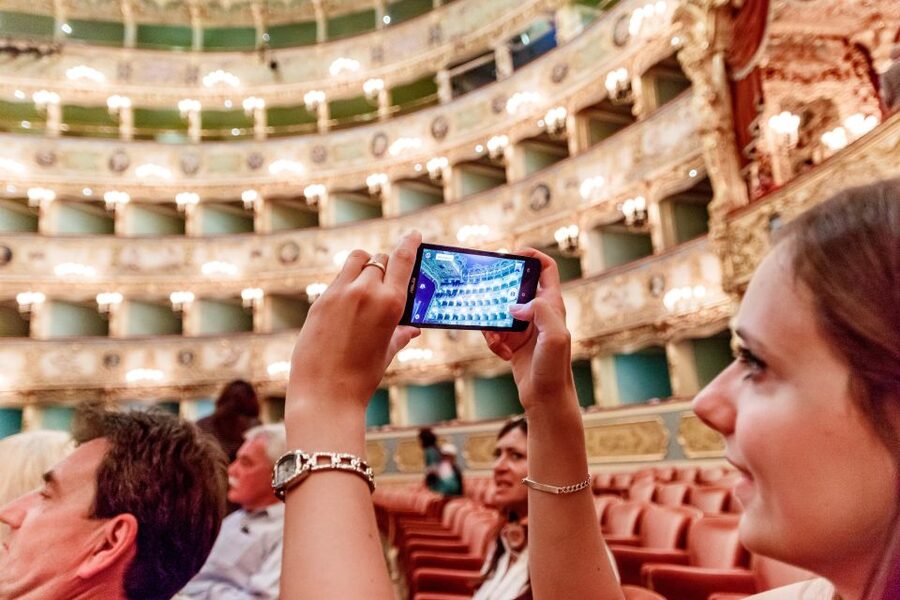
How long is the Teatro La Fenice guided tour?
The guided visit lasts one hour. Check availability for the starting times offered on your date.
How much does the tour cost?
The listed price is $28 per person.
What language is the tour in?
The tour is listed in English. A tour has also been delivered in both Italian and English, so check the format if an English-only explanation is important to you.
Where does the tour meet?
Meet the hostess directly in front of the Teatro La Fenice entrance. The explanation takes place inside the theatre, not during a walk to it.
Where does the tour end?
The activity ends back at the meeting point outside the theatre.
What is included in the price?
The included activity is a guided visit inside the theatre. An opera performance is not listed as part of the tour.
Can I see the royal box?
The royal box has been included in some visits, but access may depend on theatre activity and which areas are open that day.
Is the tour wheelchair accessible?
No. The activity is listed as unsuitable for wheelchair users.
Can I cancel and get a refund?
You can cancel up to 24 hours in advance for a full refund.
Can I reserve without paying right away?
Yes. The reserve-now, pay-later option lets you book without paying at the time of reservation.
Recently added in Venice
- Venice: Basilica and Doge’s Palace Tour with Gondola Ride★ 4.4 · 85 reviews
- Cicchetti & Concert in Venice★ 3.7 · 7 reviews
- Chioggia-Venice: Day&Night Boat Transfer Round-Trip or 1-Way★ 4.5 · 11 reviews
- Venice: Venetian Style Carnival Pub Crawl★ 3.5 · 73 reviews
- Venice: Byzantine Tour and Skip-the-Line St Mark’s Basilica★ 4.8 · 8 reviews
- Venice to Padua Full-Day Brenta Riviera Boat Cruise★ 4.3 · 118 reviews
- Biennale Architettura 2025 Intelligens Naturale Artificiale★ 4.8 · 4 reviews
- Arte Di Murano: Glass Factory Tour★ 4.5 · 7 reviews
Teatro La Fenice Tours, compared.
La Fenice Opera House Entry Ticket with Audio Guide
Read our review →
Browse the lists this tour appears in