
Reviewed · PADUA TOURS
Padova Walking Tour with Audio and Written Guide by a Local
Giotto’s frescoes are the prize at the Scrovegni Chapel, but Padua’s appeal is how much more you can see on foot in one outing: a university founded in 1222, handsome civic squares, and the Basilica of St. Anthony. This self-guided route gives you a useful framework for connecting them.
I like two things in particular: you set the pace, and the guide pairs audio with written notes, so you can listen, read, or use both. It also offers local food tips, a nice way to turn a sightseeing walk into a better lunch stop.
The trade-off is that this is a digital guide, not a live walking tour. You need a smartphone and internet connection, and the Scrovegni Chapel ticket costs an extra €16. Check the voucher before setting out so you know how to open the guide and locate each audio segment.
- Giotto’s chapel is the one paid sight: Entry costs €16 and is not included in the tour price.
- Nine major stops fit into a three-to-four-hour walk: The route includes the university, central squares, the Basilica of St. Anthony, and Prato della Valle.
- You can pause and change the pace: Audio and written commentary let you stop for a visit, coffee, or meal without holding up a group.
- The guide is digital, not a live escort: Matteo of Walking Cap created it, but you follow the route independently.
- Bring internet access: The guide runs on your smartphone, and the voucher explains how to activate it.
- The price is low, but not the whole budget: The tour costs $7.84 per person, with the chapel ticket extra if you choose to go inside.
A self-guided route through Padua’s best-known sights
This tour is a practical way to get oriented in Padua, a compact city with plenty of rewarding stops. Over about three to four hours, you follow a digital guide through nine landmarks, with audio and text that cover history, curiosities, personal anecdotes, and suggestions for local restaurants.
The format gives you control. You can move quickly through a square, spend longer inside a church, or pause the audio while you find your way. That freedom is useful in a city where a short look at a façade can easily turn into a longer visit.
The experience is sold by Walking Cap and credited to local guide Matteo. You should not expect Matteo to walk alongside you: the product is a digital guide, and you explore independently. Its low price makes that distinction important. You are paying for directions and commentary, not a personal guide who can answer questions on the spot.
What the $7.84 price gets you
At $7.84 per person, the tour costs less than a standard guided walk and covers a generous spread of central Padua. You get a digital written guide, audio and text in multiple languages, and suggestions for food and local points of interest. Group discounts are offered.
The main extra expense is the Scrovegni Chapel. Its admission ticket is not included and costs €16. If you want to see Giotto’s paintings inside, add that amount to your plans. The other listed stops have free admission, though the guide price does not cover any food or drinks you choose to buy.
This is good value if you want a route and enough context to make sense of the city without paying for a live group tour. It is less suitable if you expect extensive audio at every stop or the back-and-forth of a guide in person. The commentary aims to provide a useful introduction, not a full lecture on each site.
More walking tours around Padua:
- Padua: Private City Walking Tour & Scrovegni’s Chapel Visit
★ 4.7 · 124 reviews - Padua Walking Tour with the Scrovegni Chapel
★ 4.5 · 96 reviews - Best of Padova: Private Walking Tour with a Local
★ 3.8 · 56 reviews
Starting at Prato della Valle
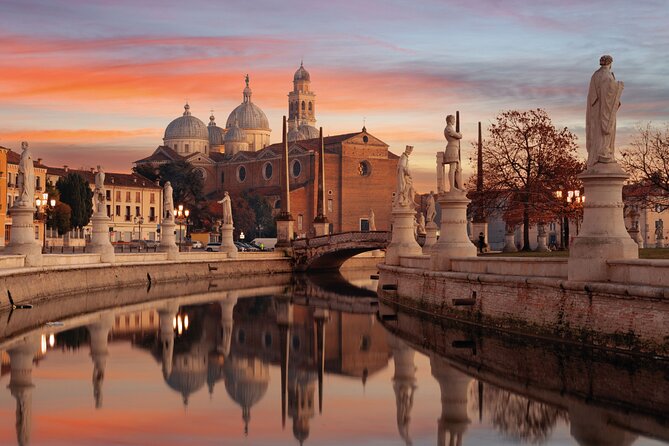
Prato della Valle is both the stated start and end point. At 88,620 square metres, it is one of Padua’s most striking public spaces and, according to the tour information, the second-largest square in Europe after Moscow’s Red Square. Even before you begin the route, its scale gives you a sense of Padua’s civic pride.
There is a small planning wrinkle: the listed stops begin with the Scrovegni Chapel and finish at Prato della Valle, while the stated meeting point is Prato. Since the route is digital and self-guided, check the directions in the guide and your voucher before starting. The information directs you to use Google Maps for individual monuments, which can help you sort out the sequence.
The route is designed for walking and suits most participants. The activity allows up to 99 people, but that does not mean you need to walk in a group. You use the guide on your own phone, at your own pace.
Giotto’s Scrovegni Chapel and the Eremitani Church
The Scrovegni Chapel is the route’s essential paid stop. It is a small church set within the area of Padua’s Roman amphitheatre, and its modest exterior gives little hint of the paintings inside. Giotto’s frescoes are the reason to make time for it: this is a major work of art tucked into a building that can look unassuming from outside.
The tour allows about 20 minutes here, but that is only a suggested stop length. The €16 admission ticket is separate, so decide in advance if entering the chapel matters to you and check the digital guide for practical directions. The guide’s commentary can give you a frame for what you are seeing, but it does not replace the visit itself.
Next comes the Church of the Eremitani, built between 1260 and 1306 for the Augustinian friars. During the 14th century, it became one of Padua’s important churches and gained works by artists including Andrea Mantegna and Guariento. It is a worthwhile contrast with the chapel: here, the story is not only the art, but also the church’s place in the city’s religious and artistic life.
The suggested time is 20 minutes, and admission is listed as free. If you have already spent time with Giotto, this stop helps broaden the picture of Padua’s art beyond one celebrated interior.
Pedrocchi Café and the city’s public squares
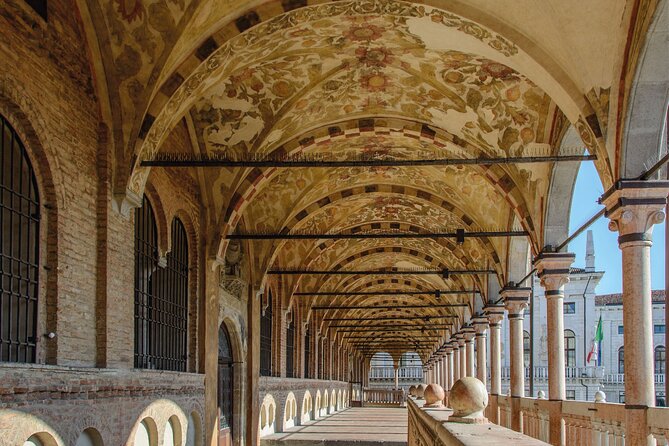
Pedrocchi Café is more than a convenient coffee stop. The tour calls it a Padua institution, and recommends a short visit. If you want to sample its signature drink, Caffè Pedrocchi combines espresso, cocoa, milk, and mint syrup. It is an unusual mix, and a good chance to take a break rather than treating the walk as a checklist.
Allow around 25 minutes here, especially if you plan to order something. The tour does not include food or drink, so this is an optional purchase, not part of the $7.84 price. The café is also a useful pause between churches and civic sights.
Piazza dei Signori offers a different kind of history. The square takes its name from the Palazzo della Signoria, also known as the Palace of the Carraresi, the ruling family of Padua from 1318 to 1405. The suggested visit is 20 minutes, enough to look around and connect the square to the city’s political past.
The Cathedral Basilica of Santa Maria Assunta follows. Its present form is linked to architect Andrea da Valle and a design by Michelangelo dating to 1551. The tour allows 20 minutes and lists admission as free. If architectural details interest you, this is a good place to slow down and compare the cathedral’s scale and design with the smaller churches on the route.
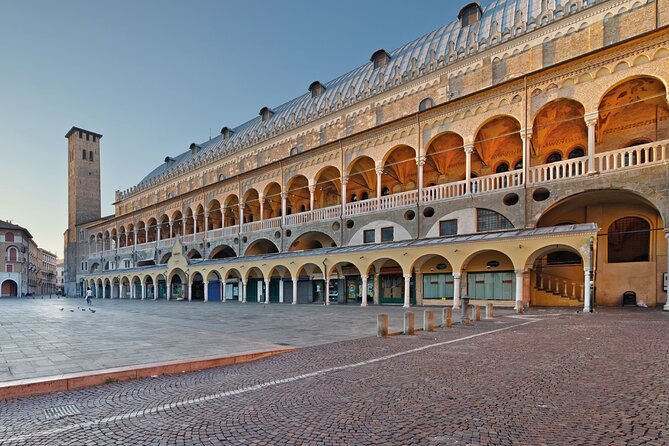
Piazza delle Erbe, a former commercial heart of the city, has a more everyday history. For centuries, this was the market square and a setting for popular festivities, while Piazza dei Signori hosted more official celebrations. The Palazzo della Ragione overlooks it, making the square a natural stop for understanding how trade and civic life fitted together.
The suggested 15 minutes here may be enough for a look, but the square’s role makes it worth more than a photo stop. The guide helps distinguish it from nearby Piazza dei Signori, which is useful because the two spaces are close and each tells a different part of Padua’s story.
More self-guided options around Padua:
- Padua: Scrovegni Chapel Ticket and Audio Guide
★ 3.9 · 61 reviews - Padua Magic Legends: Self-Guided Walking Quest
★ 3.5 · 15 reviews - Padova Scavenger Hunt and Sights Self-Guided Tour
★ 4.5 · 9 reviews - Padua’s Historical Centre: A Self-Guided Walking Tour
★ 3.5 · 6 reviews
Palazzo Bo, the Basilica of St. Anthony, and the final square
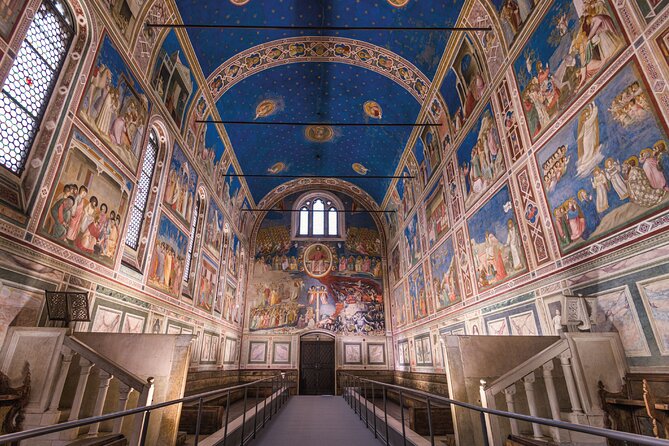
At Palazzo Bo, you reach the University of Padua. Founded in 1222, the university began when students left Bologna, whose institution was considered too controlled by the Church. That origin gives the stop more substance than a quick look at a university building: it connects Padua to the movement of students and ideas in medieval Italy.
The tour allows 20 minutes. Palazzo Bo is a good stop for anyone interested in universities and the long life of academic institutions, but the guide’s format matters here. You receive a basic introduction and can read or listen at your own pace, rather than asking a live guide to expand on a point.
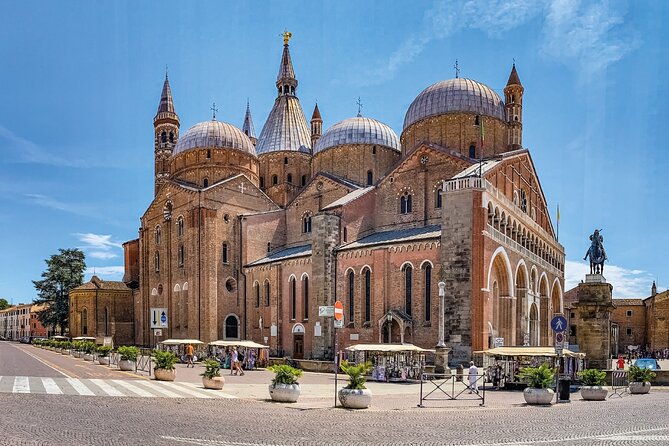
The Basilica of St. Anthony is one of the route’s major religious sights. Known locally as the Basilica del Santo, it is a widely visited sanctuary and houses the remains of Saint Anthony of Padua. The tour suggests 25 minutes, a sensible starting point for a large and significant church, though you may want extra time if you prefer to linger.
Prato della Valle closes the listed route. Its vast open space offers a change of mood after the church interiors and tight city squares. The suggested stop is 20 minutes, but you can use it to pause, review what you have seen, or simply take in the scale of the place before finishing where you began.
The nine stops cover a lot of ground, from art and religion to markets, university life, and public space. That range is the tour’s real strength. It gives you a clear first-day survey of Padua rather than concentrating on one theme.
Using the audio and written guide well

The guide is available in English, Spanish, Italian, German, and French, with audio and text options. You can listen through your phone speaker or use headphones. The written material is especially helpful if you prefer to read at your own speed, or if you want to revisit a detail after the audio ends.
A few practical habits can make the experience smoother. Before setting out, open the voucher and follow its activation instructions. Keep your phone charged and connected to the internet, since a smartphone with internet access is required. At each monument, look for the relevant audio segment under that attraction’s title; the guide’s text can serve as a fallback if you have trouble finding or playing the audio.
The commentary is intended as a helpful introduction, and the route is described in simple, intuitive terms. Still, digital navigation can be less forgiving than a live guide if you take a wrong turn or confuse one church with another. Use the map directions included for each monument instead of relying only on memory, particularly around the central churches.
One useful feature is the ability to start and stop the audio whenever you like. You can listen before entering a sight, pause while you look around, then continue when you are ready. That is a better fit for an unhurried visit than an audio track that expects you to keep walking.
Timing, food stops, and who should book
Allow three to four hours for the route, then add time if you plan to enter the Scrovegni Chapel, eat at Pedrocchi, or spend longer inside the Basilica of St. Anthony. The individual suggested visits add up to a little over three hours, but those estimates do not account for every pause, meal, or navigation stop.
The food advice is a welcome extra for a low-cost guide. Pedrocchi Café is the specific named stop, with its mint-and-cocoa coffee drink, and the digital guide also includes advice for finding local restaurants serving authentic food. If you like choosing lunch based on local suggestions rather than picking the first place you pass, that can add real value.
This experience suits independent visitors who enjoy walking, are comfortable using a phone for directions, and want a broad introduction to Padua without a fixed timetable. It is also a sensible choice if you have one day in town and want to see the major sights before deciding which deserve a longer return visit.
It is not the best match if you want a live guide, extensive spoken detail at every monument, or a route that includes more parks and lesser-known places. The digital guide focuses on the main sights listed here. One practical limitation is that it depends on internet access, so check your connection and instructions before you set out.
Booking is flexible in one useful respect: cancellation is free if you cancel at least 24 hours before the start time. Inside that 24-hour window, the payment is not refunded, and changes are not accepted. The stated opening hours run daily, but the guide’s activation details are in the voucher, so read that information carefully rather than assuming the timing.
Should you book this Padua walking tour?

I would book it if you want a low-cost, self-paced route that connects Padua’s principal landmarks and gives you enough context to appreciate them. Its best qualities are the freedom to pause and the mix of audio and written material. The included food tips are a useful bonus.
Skip it if you need a person beside you to answer questions or guide you through every turn. And if the Scrovegni Chapel is a priority, remember to budget the extra €16 for entry. For an independent walk with a clear route and a flexible schedule, this is a practical way to meet Padua.
FAQ
How long does the Padua walking tour take?
Plan on approximately three to four hours. You may need longer if you spend extra time at the sights or stop for food and coffee.
Where does the tour start and end?
The stated start and end point is Prato della Valle in Padua. Check the guide’s directions before setting out, since the listed sightseeing stops begin at the Scrovegni Chapel.
Is the Scrovegni Chapel ticket included?
No. Entry is optional and costs €16, paid separately from the tour.
Do I need a smartphone and internet connection?
Yes. You need a smartphone with an internet connection to use the digital guide. The voucher includes instructions for activating it.
What languages are available?
Audio and text are offered in English, Spanish, Italian, German, and French.
Is this a live guided tour?
No. It is a self-guided digital experience created by local guide Matteo of Walking Cap. You follow the route and use the audio and written guide independently.
How many sights are included?
The route lists nine stops: the Scrovegni Chapel, Church of the Eremitani, Pedrocchi Café, Piazza dei Signori, Cathedral Basilica of Santa Maria Assunta, Piazza delle Erbe, Palazzo Bo, Basilica of St. Anthony, and Prato della Valle.
Can I cancel for a refund?
Yes, if you cancel at least 24 hours before the experience’s start time. Cancellations within 24 hours are not refundable, and changes made during that period are not accepted.
More audio-guided walks around Padua
- Audio Guided Tour in Padua Baptistery and Museum of the Diocese
★ 5.0 · 5 reviews - Venice: La Fenice Opera House Entry Ticket with Audio Guide
★ 4.6 · 11,742 reviews - Trieste Bus Tour with Audio Guide
★ 4.5 · 1,648 reviews - Venice: St. Mark’s Basilica Ticket with Audio Guide
★ 3.4 · 1,645 reviews
Recently added in Padua
- DA Padova: Wine tour in the Euganean Hills★ 5.0 · 15 reviews
- Padua’s Historical Centre: A Self-Guided Walking Tour★ 3.5 · 6 reviews
- From Padua, Full Day Tour of Verona and Garda Lake★ 5.0 · 8 reviews
- Vegetarian Cooking Class from Veneto Region by a local★ 5.0 · 7 reviews
- Chioggia : Tour to Pellestrina with Typical Lagoon Boat★ 5.0 · 16 reviews
- Tour to the Venetian Villas and the Brenta Riviera from Padua★ 5.0 · 6 reviews
- Chioggia : Unveiling City Charm By Boat★ 5.0 · 106 reviews
- Tour to Villa dei Vescovi and the Valsanzibio Garden★ 5.0 · 16 reviews
Padua Tours, compared.
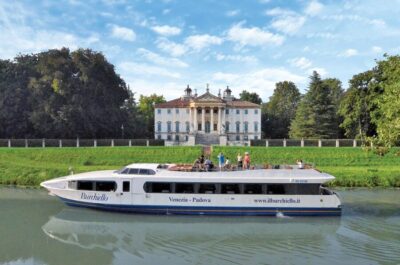
Padua to Venice Boat Cruise of the Brenta Riviera
Read our review →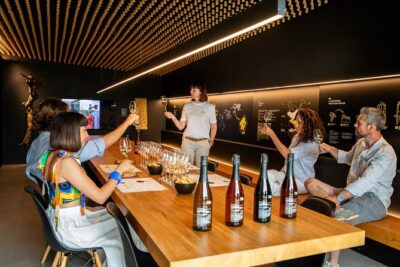
Full-Day Padua to Venice Burchiello Brenta Riviera Boat Cruise
Read our review →
Prosecco tasting, appetizers and tour of the cellar and vineyards
Read our review →
Padova: Baptistery of the Cathedral & Museum of the Diocese
Read our review →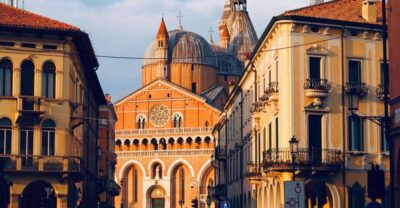
Private City Walking Tour & Scrovegni’s Chapel Visit
Read our review →
Browse the lists this tour appears in