
Reviewed · VENICE TOURS
Venice: Leonardo Da Vinci Museum Entrance Ticket
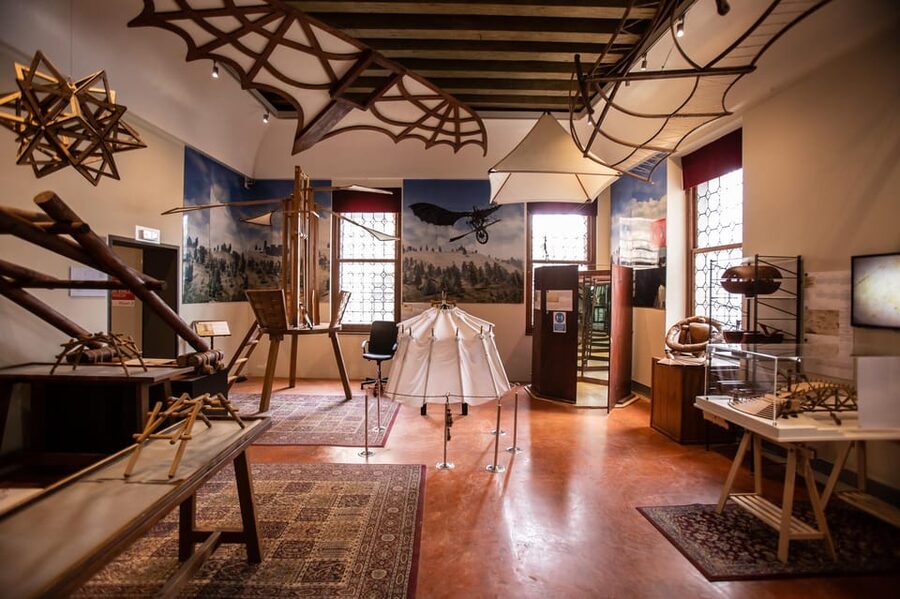
Leonardo’s ideas make more sense when you can turn a gear, test a mechanism or try a wooden construction yourself. At this compact museum, you’ll find working reproductions of his designs, along with displays on his art and anatomy.
I like two things in particular: the chance to handle the models makes the visit engaging for adults as well as children, and the small scale lets you fit it between Venice’s bigger sights. The trade-off is that the museum is modest in size, so visitors hoping for a large collection or a guided tour should look elsewhere.
- Four sections organize the inventions: Earth, Water, Fire and Air give the displays a clear structure.
- Many models are hands-on: You can operate selected machines and see how their mechanisms work.
- Art and anatomy share the space: Expect high-resolution backlit painting reproductions and displays about Leonardo’s medical studies.
- Plan around an hour: A quick visit may take 30 minutes, while a slower one can stretch to about 90 minutes.
- Find it near San Rocco: The museum is at Campo San Rocco, opposite the Scuola Grande di San Rocco and behind the Church of the Frari.
- It’s self-guided: Information appears in Italian, English, French, German, Spanish and Russian, with multimedia displays.
A hands-on look at Leonardo’s ideas
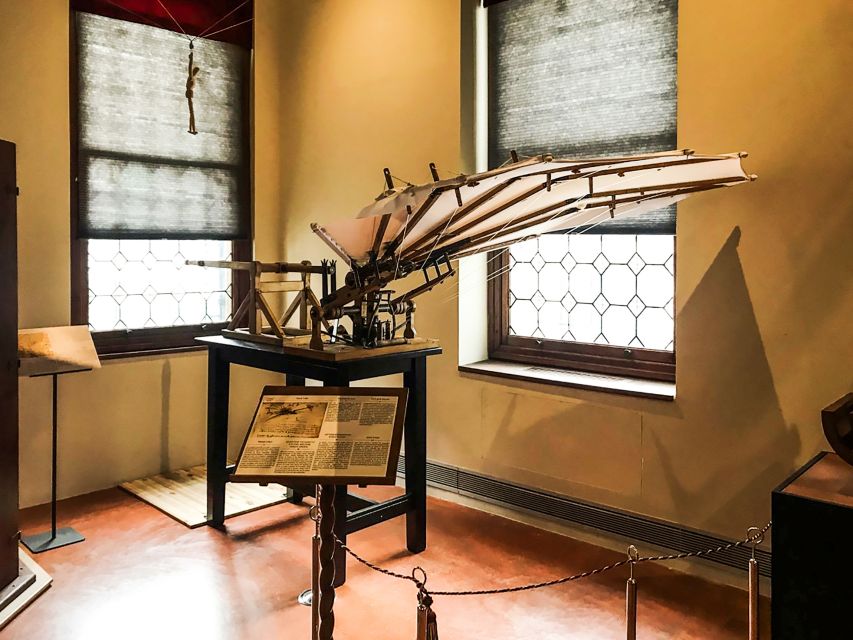
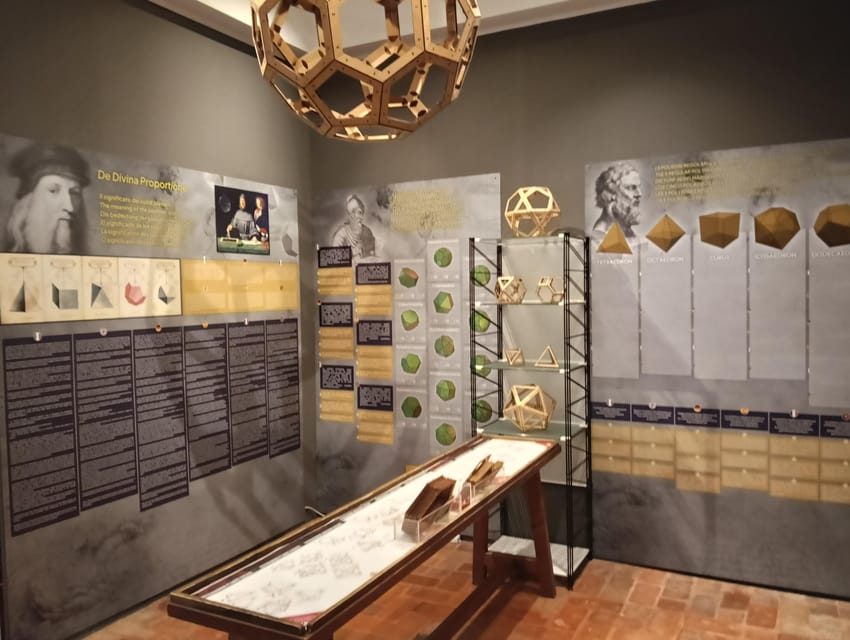
This is less a formal art museum than a practical introduction to a restless mind. Leonardo da Vinci is famous for his paintings, but the museum makes room for the engineer, anatomist and inventor, too. Its reproductions turn drawings and concepts into objects you can study from more than one angle.
The machines are reconstructed from Leonardo’s designs, with changes where needed to account for the original proportions. That distinction matters: these are not surviving machines from his workshop, but models that help explain how his ideas might work. You get a useful bridge between a sketch on a page and the moving parts it describes.
The museum is arranged around four elements: Earth, Water, Fire and Air. The themes help keep the exhibition easy to follow, especially for children, while giving you a sense of how broadly Leonardo applied his curiosity. Don’t expect a strict chronological account of his life; the appeal here lies in seeing ideas grouped by subject and trying some of them out.
Turning the models, not just reading about them
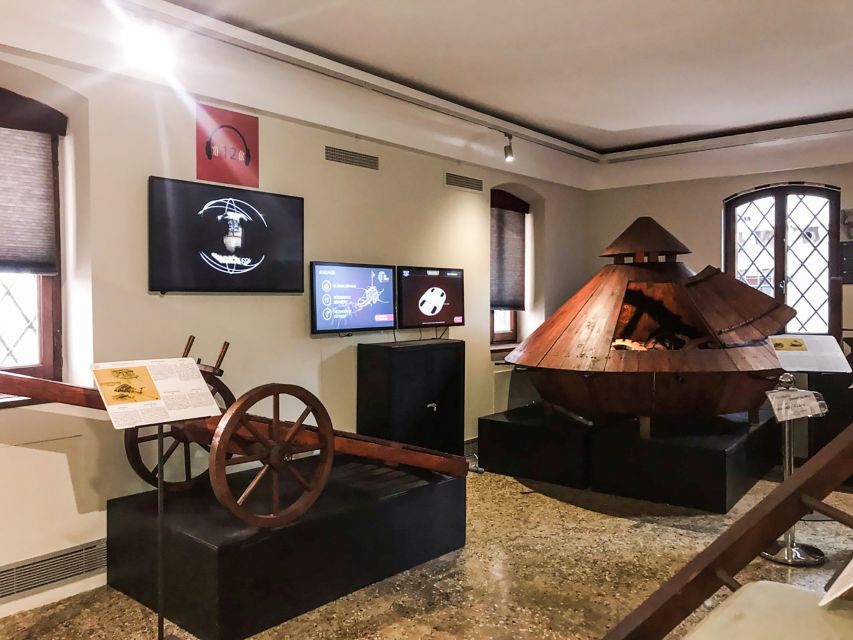
The interactive machines are the main reason to come. Instead of moving past a row of objects behind glass, you can engage with selected reproductions and see how their parts move. That changes the visit from a quick look at a famous name into a practical lesson in design, force and motion.
You don’t need an engineering background to enjoy this. The models give you a physical way to consider how a mechanism works, and their hands-on nature helps younger visitors stay involved. Adults can join in, too. The exhibits invite curiosity rather than asking you to stand quietly and absorb long blocks of text.
Some construction puzzles add another layer. One wooden bridge puzzle on the second floor may be easier with another person helping, so bring a companion into the challenge rather than treating it as a solo test. The interactive elements are worth handling with care: they are museum exhibits, not toys, even when the design makes them tempting to play with.
Because these machines are reproductions, the experience is interpretive rather than archaeological. You are not seeing Leonardo’s original tools or inventions. You are seeing modern builds based on his designs, made to give you a clearer idea of his thinking. For many visitors, that hands-on explanation is more memorable than a wall of diagrams alone.
More museum visits around Venice:
- Venice’s Best: Basilica, Doge’s Palace, Gondola & History Gallery
★ 4.5 · 2,478 reviews - Venice: Vivaldi’s Four Seasons Concert & Music Museum Visit
★ 4.8 · 2,065 reviews - Charming Gondola Ride on the Grand Canal & Gondola Gallery™
★ 4.0 · 1,313 reviews
Four elements, four ways into the exhibition
The Earth, Water, Fire and Air sections offer a straightforward route through the displays. Each gives you a different lens on Leonardo’s inventive work, while the models make the ideas easier to picture. The labels and multimedia help fill in the context, and the available languages include Italian, English, French, German, Spanish and Russian.
Treat the four themes as a way to organize your attention, not as four equally sized galleries. The museum is small, and the rooms are compact. That’s an advantage if you have limited time, though it also means you should not expect an expansive collection with a long sequence of separate halls.
Take your time with the models that catch your eye. The point is not to rush through every section, but to notice how Leonardo approached a problem and how a design might function. If you’re visiting with children, give them room to try the activities while keeping an eye on the exhibits and other people.
Art and anatomy beyond the machines
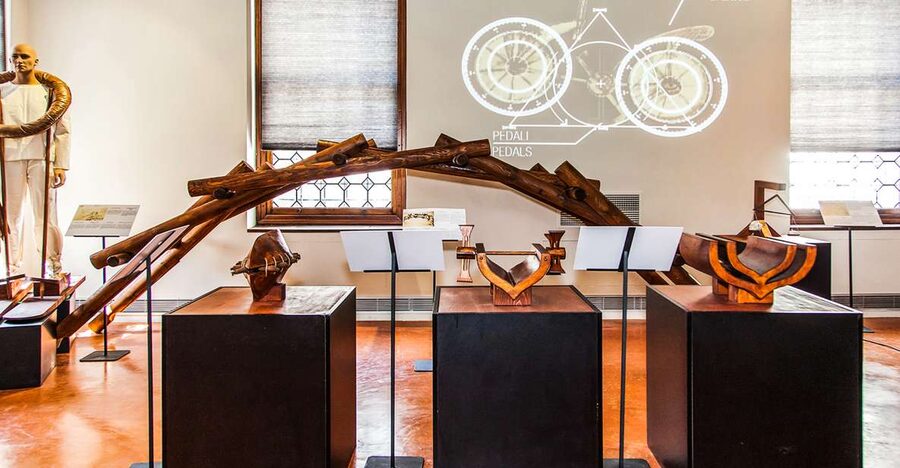
Leonardo’s inventions are only part of the picture. The museum also introduces his studies of human anatomy, giving you a glimpse of the careful observation behind his medical work. It’s a useful reminder that his interests ranged well beyond painting and machinery.
High-resolution, backlit reproductions of major paintings offer a different kind of pause from the hands-on displays. They won’t replace seeing original works, but they let you look closely at images in a focused setting. For someone who knows Leonardo chiefly as a painter, the contrast between art, anatomy and engineering helps build a fuller picture of his work.
The exhibition also uses multimedia to provide information about his life and achievements. A film is described as a concise overview, which suits the museum’s compact format. If you prefer to learn through short explanations and visual material rather than reading long texts, this mix should work well.
There is also a mirror room that reflects your image from different angles. It’s a playful change of pace, particularly for children, and one of the more distinctive features of the visit. The museum’s combination of machines, images, video and interactive displays keeps the experience varied, even within a limited space.
How long to allow
Think of this as a 30-to-90-minute stop, rather than a full-day museum outing. If you move quickly and focus on a few machines, you may be through in about half an hour. A more relaxed visit, with time to read, watch the film, try puzzles and explore the exhibits, can take around an hour to 90 minutes.
That flexibility makes the museum useful on a busy Venice itinerary. You can fit it between larger attractions without giving up half a day, or use it as a change of pace from walking the city’s lanes. It can also offer a calmer indoor break from the streets, though the visit is still best planned around the museum’s opening hours.
The ticket is valid for one day, and the last entrance is one hour before closing. Check the available starting times before you go, and avoid arriving close to the final admission if you want time to try the exhibits. There is no guided tour included, so you can set your own pace once inside.
More tickets and passes around Venice:
- Venice: Doge’s Palace Reserved Entry Ticket
★ 4.6 · 42,716 reviews - Venice: La Fenice Opera House Entry Ticket with Audio Guide
★ 4.6 · 11,742 reviews - Venice: St. Mark’s Basilica & Doge’s Palace Tour with Ticket
★ 4.7 · 3,375 reviews - Venice: Palazzo Contarini del Bovolo Entrance Ticket
★ 4.3 · 1,991 reviews
Finding the museum near San Rocco
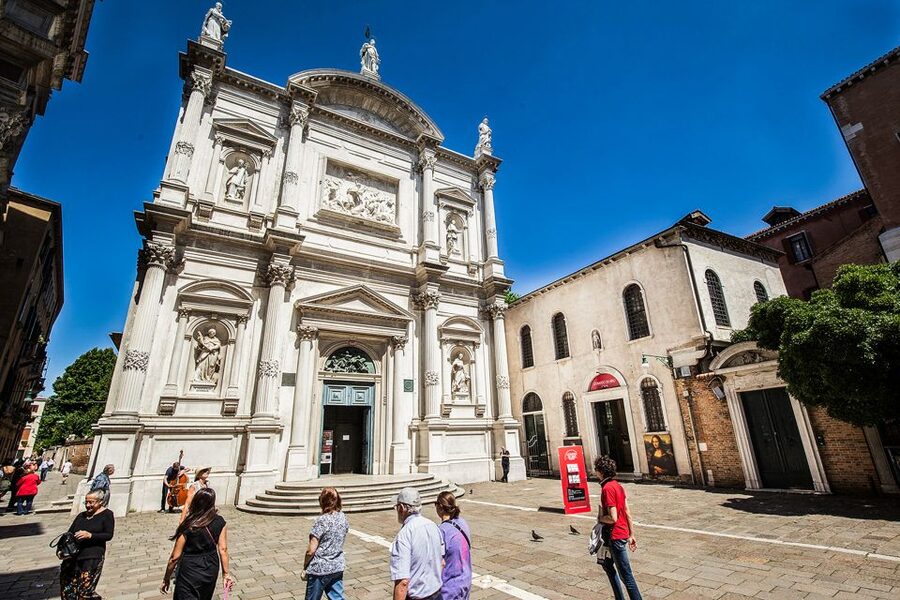
The address is Campo San Rocco, 3052, Venice, in the Scoletta di San Rocco building. It is opposite the Scuola Grande di San Rocco and behind the Church of the Frari. The exact location can be a little less obvious than a major landmark, so check the address and look for the museum entrance rather than expecting to meet a guide outside.
When you arrive, present your ticket to the reception staff and enter. This is a self-guided museum visit, not a scheduled group tour with a guide waiting at the meeting point. That distinction is worth knowing if you booked through an activity platform and are used to meeting a tour leader.
A practical extra: scan the QR code near the front of the shop if you want to use the audio guide. The museum also provides descriptions in six languages and multimedia displays, but checking for the QR code at the start can save you from doubling back later.
A good-value stop for families and curious adults
At about $10 per person, this museum offers a lot of participation for a relatively short visit. The value is strongest if you enjoy hands-on learning, want a family activity, or are curious about Leonardo beyond his paintings. You are paying for access to an interactive exhibition, not a guide or an extensive collection of originals.
Children under three enter free, and anyone under 15 must be accompanied by an adult. The mix of machines, puzzles and visual displays makes it easier for different ages to find something to do. An adult who loves art may linger over the reproductions, while a child may head straight for the models and activities.
There is a bookshop with Leonardo-themed gifts and souvenirs, and the entry ticket includes a 10 percent discount on bookshop purchases. That’s a modest perk rather than a reason to book, but it may be useful if you want a small keepsake or a book related to the exhibition.
Photography is allowed inside. If you’re visiting with a group, that can make it easier to remember a favorite model or a shared puzzle, though the more valuable part of the experience is the chance to see how the pieces work in person.
Who will enjoy it, and who may want more
I’d recommend this museum to families, curious adults and anyone who likes learning by doing. It’s especially well suited to a short visit with children because it gives them something to operate and explore, rather than asking for a long stretch of quiet attention. Adults who want to understand Leonardo as an inventor and anatomist will also find more here than a quick display of famous paintings.
It’s a less obvious choice if your main goal is to see original artworks, spend several hours in a large museum, or hear a guide explain every exhibit. The visit is self-guided, and the collection is compact. If you’re passionate about Leonardo, you may wish there were more to see; if you have only a short window in Venice, that same compact scale is a real benefit.
The museum’s best quality is its practical approach. It lets you connect a famous name with actual mechanisms, questions and experiments. You leave with a more tangible sense of why Leonardo’s ideas still attract attention, even if you have only an hour to give them.
Should you book the Venice Da Vinci Museum ticket?
Book it if you want a short, hands-on museum visit that works for both adults and children, or if you’d like a break from Venice’s outdoor sights. The reasonable price, interactive models and flexible visit length make it an easy addition to a busy day.
Skip it if you’re looking for a guided tour, a large art collection or original Leonardo works. For everyone else, it’s a practical way to spend an hour with the inventor behind the famous paintings, and the working models give the visit a clear purpose beyond simply reading about him.
FAQ
How much does the ticket cost?
The listed price is $10 per person.
How long does a visit take?
Allow about 30 to 90 minutes. A quick visit may take around half an hour, while a slower visit with time for the displays and activities can take about 1.5 hours.
Is this a guided tour?
No. The ticket provides museum entry, and you explore the exhibition on your own.
What languages are available?
Descriptions are available in Italian, English, French, German, Spanish and Russian. Multimedia displays also provide information about Leonardo’s life and work.
Can children visit the museum?
Yes. Children under 15 must be accompanied by an adult, and children under three enter free.
Can I take photos inside?
Yes, photography is allowed inside the museum.
Where is the museum, and when is the last admission?
It is at Campo San Rocco, 3052, in the Scoletta di San Rocco building, opposite the Scuola Grande di San Rocco and behind the Church of the Frari. Last entrance is one hour before closing.
Recently added in Venice
- Venice: Basilica and Doge’s Palace Tour with Gondola Ride★ 4.4 · 85 reviews
- Cicchetti & Concert in Venice★ 3.7 · 7 reviews
- Chioggia-Venice: Day&Night Boat Transfer Round-Trip or 1-Way★ 4.5 · 11 reviews
- Venice: Venetian Style Carnival Pub Crawl★ 3.5 · 73 reviews
- Venice: Byzantine Tour and Skip-the-Line St Mark’s Basilica★ 4.8 · 8 reviews
- Venice to Padua Full-Day Brenta Riviera Boat Cruise★ 4.3 · 118 reviews
- Biennale Architettura 2025 Intelligens Naturale Artificiale★ 4.8 · 4 reviews
- Arte Di Murano: Glass Factory Tour★ 4.5 · 7 reviews
Venice Tours, compared.
Grand Canal Gondola Ride with App Commentary
Read our review →
Boat Trip: Glimpse of Murano, Torcello & Burano Islands
Read our review →
La Fenice Opera House Entry Ticket with Audio Guide
Read our review →
Doge’s Palace & St. Mark’s Basilica with Terrace Access Tour
Read our review →
Burano, Torcello & Murano Boat Tour w/Glassblowing
Read our review →
Murano and Burano Boat Tour with Glass Factory Visit
Read our review →Browse the lists this tour appears in