
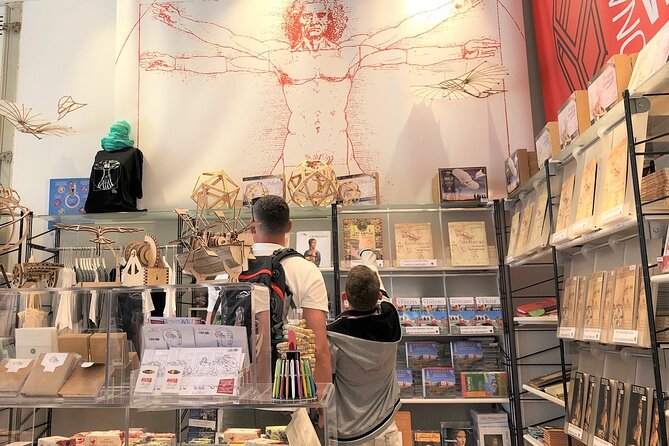
Reviewed · VENICE TOURS
Da Vinci Interactive Museum Venice Scuola di San Rocco
Leonardo’s inventions are the main event here. At this compact museum near Campo San Rocco, you can try working models based on his designs, from a hands-on way to see how his ideas fit together to studies that make his imagination feel less abstract.
I like two things in particular: you can operate many of the models yourself, and the backlit painting reproductions come with explanations that put Leonardo’s art alongside his work as an inventor and anatomy student. The exhibits are presented in four themes: earth, water, air and fire.
One consideration: this is a small, self-guided museum, not a large immersive exhibition or a guided tour. It suits curious families and Leonardo enthusiasts best, while visitors expecting original paintings or a long museum visit may find it limited.
What to know before you go
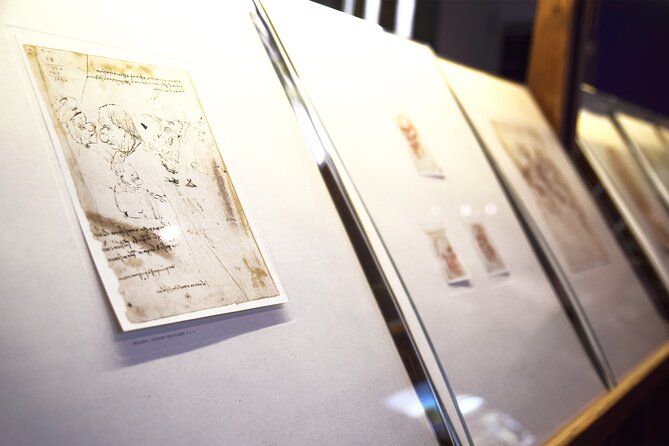
- Try Leonardo’s machine designs: Interactive models let you handle and operate many of the inventions.
- Follow four themes: The rooms are arranged around earth, water, air and fire.
- See art and science together: The display includes anatomy studies and backlit reproductions of major paintings.
- Read in your language: Exhibit descriptions are offered in Italian, English, French, German, Spanish and Russian.
- Allow about 45 minutes: A quick visit may take around 20 minutes; working through activities and puzzles can stretch the visit to an hour or more.
- Check the address carefully: Another Leonardo da Vinci museum is about an eight-minute walk away, so confirm you are heading to the museum at Campo San Rocco.
A compact museum about a big mind
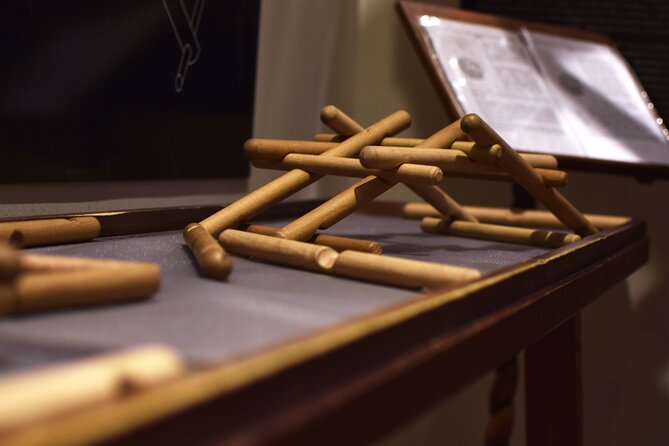
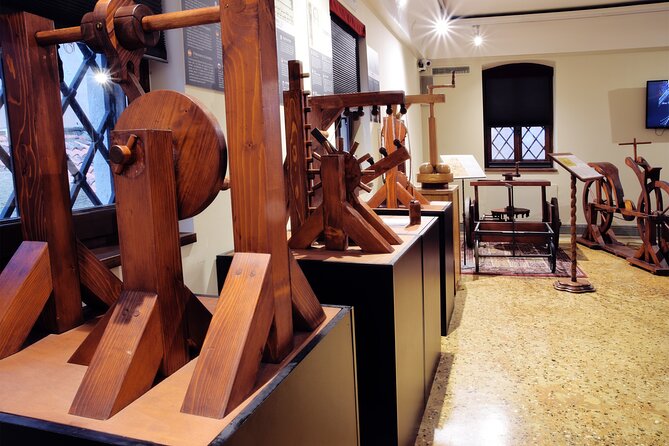
This museum is a focused introduction to Leonardo da Vinci, the artist and inventor whose ideas ranged far beyond the paintings most people know. Rather than presenting a large collection of original works, it makes his designs the center of the visit. The key attraction is being able to see how the machines might work, and in many cases to operate them yourself.
That hands-on approach gives the exhibits a different feel from a conventional art gallery. A diagram can be difficult to read at a glance; a model you can move helps reveal how its parts relate. If you are visiting with children, that physical interaction can turn a short stop into an active lesson. Adults who enjoy engineering, design or art history may find plenty to think about too.
The experience is self-guided. There is no professional guide included, so you set your own pace and choose what deserves a closer look. Text is available in six languages, and multimedia displays add context about Leonardo’s life and work. Free audio guides are available at the entrance on request, a useful option if you want more explanation than the labels provide.
More museum visits around Venice:
- Venice: Leonardo Da Vinci Museum Entrance Ticket
★ 4.5 · 3,560 reviews - Venice’s Best: Basilica, Doge’s Palace, Gondola & History Gallery
★ 4.5 · 2,478 reviews - Venice: Vivaldi’s Four Seasons Concert & Music Museum Visit
★ 4.8 · 2,065 reviews
Four sections, from earth to fire
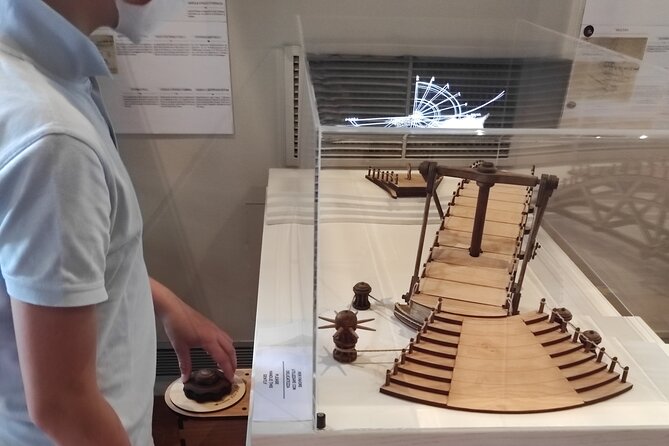
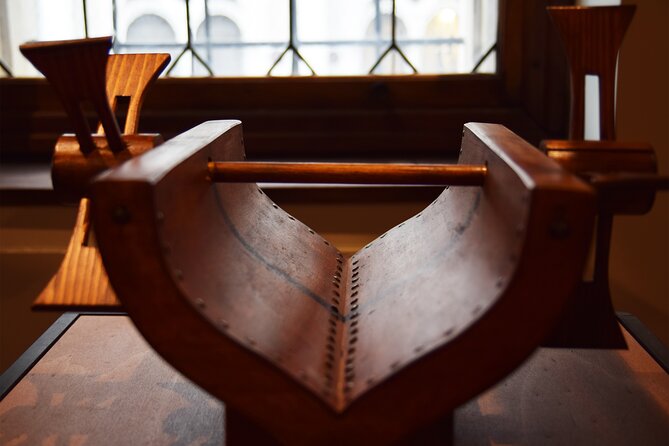
The exhibition is organised into four sections: earth, water, air and fire. This structure gives you a simple way to move through Leonardo’s interests and inventions, rather than treating the museum as a random collection of objects. The models are built according to his designs, keeping their original proportions unless a change was needed to make them work.
The models are the most active part of the visit. You can handle or operate many of them, and some activities invite you to work through a puzzle. That makes the museum especially appealing to children who like to test how things move, but it is not only a children’s attraction. Trying a mechanism can help adults picture the design process and see the practical questions behind Leonardo’s sketches.
Keep expectations in proportion. The museum is small, and the models are replicas, not original machines from Leonardo’s workshop. The value lies in seeing his ideas translated into objects you can explore, not in viewing a vast collection or a high-tech spectacle. If you enjoy learning by doing, that distinction matters. If you expect a large, immersive production, this may feel modest.
Paintings and anatomy beyond the machines
The museum also presents studies of anatomy and high-resolution reproductions of major paintings. The art copies are backlit, which helps make the images clear and easy to examine. They are accompanied by explanations, so you can spend time considering Leonardo’s artistic work as well as his inventions.
These are reproductions, not original paintings. That is worth knowing before you go, especially if your main goal is to see famous works of art in person. The museum’s strength is the connection it draws between different sides of Leonardo’s work: the artist who studied the human body and the inventor who imagined machines with parts and systems.
The displays may also change how you think about Leonardo’s reputation. It is easy to focus on the Mona Lisa and the Last Supper, but this visit gives more room to his designs, studies and broad curiosity. For an art lover seeking original masterpieces, it is not a substitute for a major art museum. For someone interested in the breadth of Leonardo’s ideas, it offers a more varied picture.
A short film and useful explanations
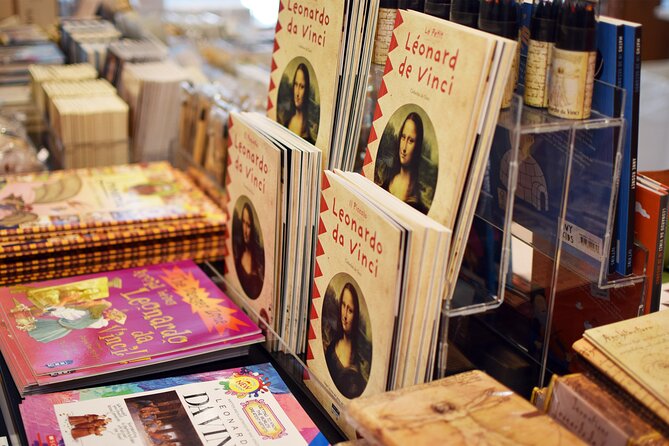
Multimedia displays add a timeline and background on Leonardo’s life and work. A short introductory film helps set the scene, though it is brief. Think of it as a starting point rather than a full documentary or a replacement for exploring the displays.
The written explanations are available in Italian, English, French, German, Spanish and Russian. That range makes the museum easier to follow for international visitors, and the labels can help you make sense of the models without a guide. If you want extra context, ask for the free audio guide when you arrive. It may not be offered automatically with your mobile ticket.
The museum’s small scale is both a practical advantage and a limit. You do not need to set aside half a day, and you can focus on the subjects that interest you. But visitors who want a lengthy, detailed account of Leonardo’s life may want a larger museum or a guided experience elsewhere.
More tours in Venice worth a look
- Venice: Doge’s Palace Reserved Entry Ticket
★ 4.6 · 42,716 reviews - Venice: Grand Canal Gondola Ride with App Commentary
★ 4.1 · 18,908 reviews - Boat Trip: Glimpse of Murano, Torcello & Burano Islands
★ 4.3 · 15,699 reviews - Venice: Grand Canal by Gondola with Live Commentary
★ 4.1 · 13,681 reviews
How long to stay and who will enjoy it
The stated visit length is about 45 minutes. In practice, the time depends on how much you interact with the models. You could move through quickly in around 20 minutes, while trying the activities and puzzles can occupy an hour or longer. If you are visiting with children, allow extra time for them to test the mechanisms rather than rushing from one display to the next.
This is a good fit for families, especially children interested in inventions, physical sciences or hands-on exhibits. Adults who are curious about Leonardo’s designs can enjoy it too, but the appeal is strongest if you like interactive displays and are comfortable with replicas. If you only want to see original art, or expect a large museum with a long narrative, consider another stop.
The museum is on two floors, with steps between them. Keep that in mind when planning your visit. Food, chewing gum and beverages are not allowed in the exhibit areas, and children and young people need to be supervised. Service animals are allowed.
Price, location and practical details
Admission is listed at $10.21 per person, with a mobile ticket. For a compact, interactive museum, that is a modest price if you plan to spend time operating the models and reading the explanations. It is less compelling value if you expect a large-scale exhibition or original artworks. The attraction is offered in English, while the museum’s descriptions are available in six languages.
You can visit any time during opening hours, which are 10:30 a.m. to 4:30 p.m. daily. The last entrance is at 4 p.m., so do not arrive at closing time expecting a full visit. The experience is near public transportation, though no specific route details are provided here.
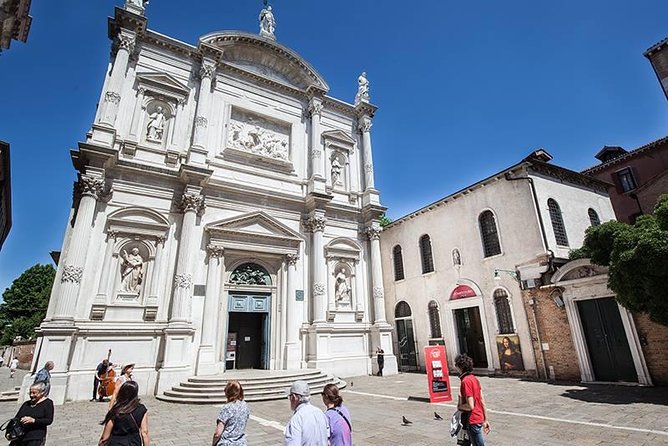
Check your map carefully before setting out. A separate Leonardo da Vinci museum is about an eight-minute walk away, and the two can be confused. The museum reviewed here is at Campo San Rocco. The nearby Scuola Grande di San Rocco is also a notable sight, but it is a separate attraction, not part of this museum admission.
On certain dates, day visitors staying outside Venice may need to pay a €5 access fee. The dates and exemptions vary, so check the official Venice access-fee website before your visit. You can cancel for a full refund up to 24 hours before the experience start time; cancellations or changes made later are not accepted.
Should you book this museum?
Book it if you want a short, hands-on introduction to Leonardo’s inventions, particularly if you are visiting with children or enjoy seeing how designs work. The interactive models, clear explanations and mix of art, anatomy and engineering give the visit more substance than its small size suggests.
Skip it if your priority is original paintings, a long guided tour or a large immersive exhibition. At about $10.21, the price is reasonable for a focused visit, but the experience depends on your interest in Leonardo’s ideas and willingness to explore replicas. For the right visitor, 45 minutes here can be a useful and enjoyable change of pace in Venice.
FAQ
How long does a visit take?
The approximate visit duration is 45 minutes. You may finish in about 20 minutes if you move quickly, or spend an hour or more trying the activities and puzzles.
What are the museum’s opening hours?
It is open daily from 10:30 a.m. to 4:30 p.m. The last entrance is at 4 p.m.
Is the museum suitable for children?
Yes. The exhibition is recommended for adults and children, and its interactive models can encourage curiosity and hands-on learning. Children and young people must be supervised.
Are the exhibits interactive?
Yes. The museum includes interactive models based on Leonardo da Vinci’s designs, and you can operate many of them.
Is a professional guide included?
No. Admission does not include a professional guide. Free audio guides are available at the entrance on request.
What languages are available for the exhibit descriptions?
Descriptions are available in Italian, English, French, German, Spanish and Russian.
Are the paintings original?
No. The museum displays high-resolution, backlit reproductions of major paintings, along with explanations.
Are food and drinks allowed inside?
No. Food, chewing gum and beverages are prohibited in the exhibit areas.
Is there an extra Venice access fee?
On certain dates, day visitors staying outside Venice may be required to pay a €5 access fee. Check the official Venice access-fee website for applicable dates and exemptions.
Recently added in Venice
- Venice: Basilica and Doge’s Palace Tour with Gondola Ride★ 4.4 · 85 reviews
- Cicchetti & Concert in Venice★ 3.7 · 7 reviews
- Chioggia-Venice: Day&Night Boat Transfer Round-Trip or 1-Way★ 4.5 · 11 reviews
- Venice: Venetian Style Carnival Pub Crawl★ 3.5 · 73 reviews
- Venice: Byzantine Tour and Skip-the-Line St Mark’s Basilica★ 4.8 · 8 reviews
- Venice to Padua Full-Day Brenta Riviera Boat Cruise★ 4.3 · 118 reviews
- Biennale Architettura 2025 Intelligens Naturale Artificiale★ 4.8 · 4 reviews
- Arte Di Murano: Glass Factory Tour★ 4.5 · 7 reviews
Venice Tours, compared.
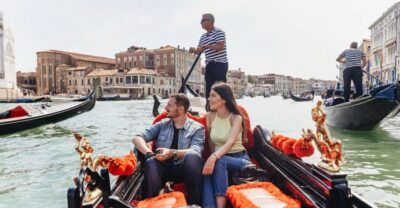
Grand Canal Gondola Ride with App Commentary
Read our review →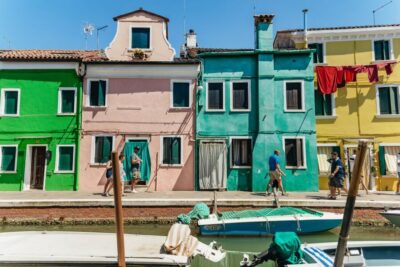
Boat Trip: Glimpse of Murano, Torcello & Burano Islands
Read our review →
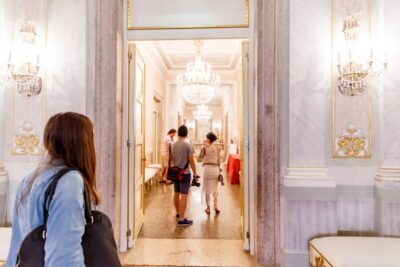
La Fenice Opera House Entry Ticket with Audio Guide
Read our review →
Doge’s Palace & St. Mark’s Basilica with Terrace Access Tour
Read our review →
Burano, Torcello & Murano Boat Tour w/Glassblowing
Read our review →
Murano and Burano Boat Tour with Glass Factory Visit
Read our review →Browse the lists this tour appears in